
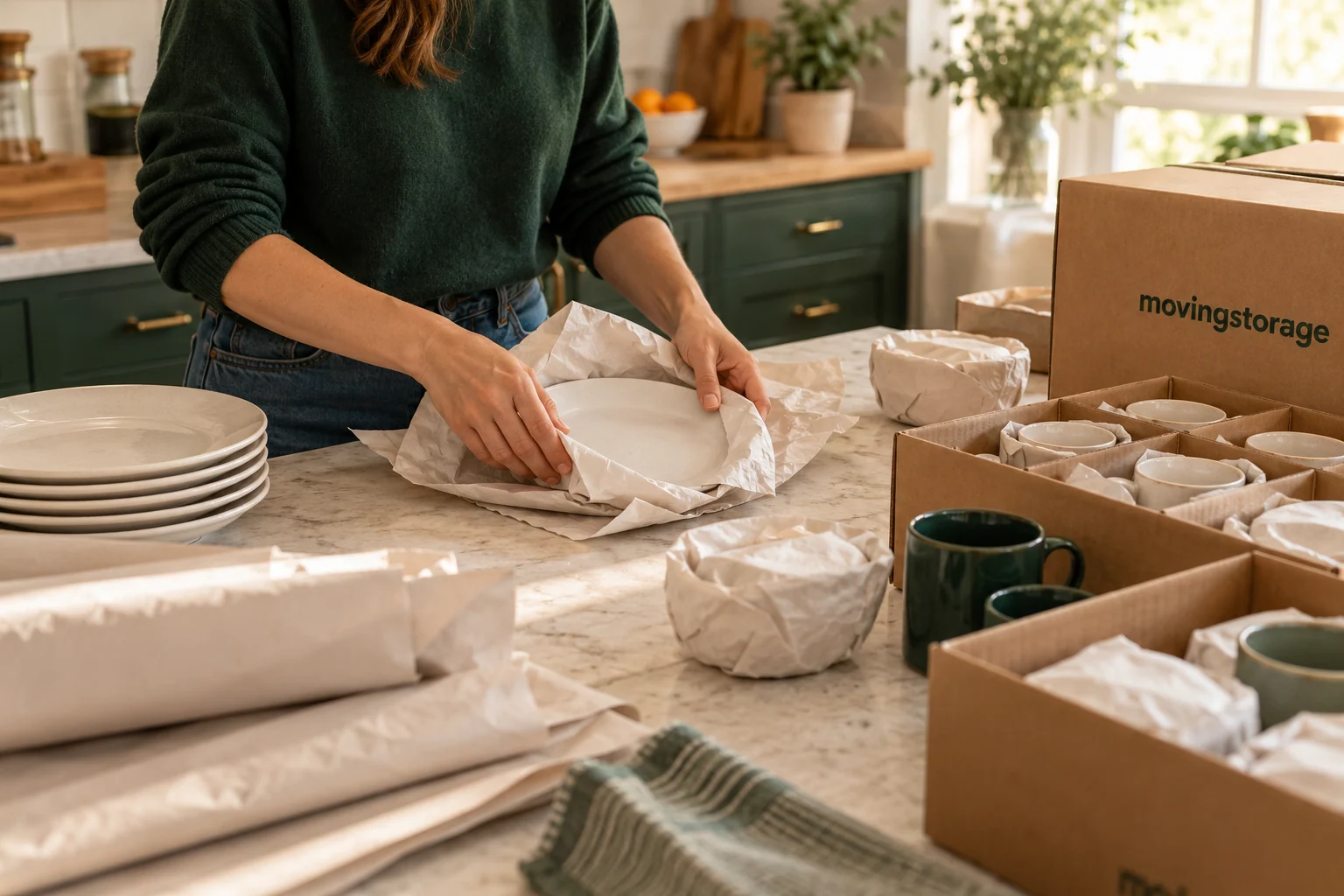
A kitchen is easier to pack when you stop treating it as one collection. Plates, pantry food, knives, small appliances, cleaning products, and the tools for tomorrow's breakfast need different decisions. Separate those groups before you choose cartons. The aim is to close most cupboards early while leaving a small, deliberate kitchen available for the final days. That small working set should be something you planned, rather than the random objects that happened to escape packing.
Start with an empty table or a clear counter protected for the work. Gather clean wrapping material, suitable cartons, tape, labels, and a container for pieces that need further checking. Work on one cupboard at a time and finish its contents before pulling out the next one. Covering every surface with unpacked dishes can stop you cooking, cleaning, or seeing what remains. A controlled work area also makes it easier to notice an item that needs more protection or a different container.
Decide what the kitchen must still do
Write down the meals you expect to prepare before moving day. Use those meals to choose the pan, utensils, plates, mugs, and food that remain out. Keep the set small enough to pack in one final session without making eating unnecessarily difficult. If children, pets, or a household member's diet require particular equipment, include that equipment by name. A generic “last kitchen box” note will not remind you that a specific bottle, bowl, or preparation tool is still being used.
Check the travel and arrival arrangements before planning food. A long drive, an overnight stop, or a delay in getting a refrigerator ready can make your usual food storage impossible. Do not assume that food can travel in the moving shipment. Ask the provider what it accepts and under which conditions, and follow the relevant food safety guidance for your travel plan. Plan to use up or appropriately dispose of food that cannot be transported safely rather than trying to rescue it at the loading door.
Choose a separate bag for the items that will travel with you. It may contain a few utensils, drinking containers, snacks that suit the journey, and the items needed for the first meal. Make this bag visibly different from the shipment cartons. If you use the same style of box for everything, add an unmistakable instruction saying it is not to be loaded. Your first-night moving box should remain accessible even if the main kitchen shipment arrives later than you do.
Open every cupboard before buying more supplies
A quick cupboard survey shows whether you need many small containers, a few dish cartons, protection for long trays, or a separate plan for a large appliance. Include the drawers beneath ovens, shelves above refrigerators, and the cupboard you rarely open. Do not order materials solely from the number of kitchen units. Two kitchens with similar cupboards can contain very different loads, especially where one household cooks frequently and another stores mostly light serving pieces.
Set aside items you will not take. Empty duplicate containers, worn utensils, unwanted gadgets, and appliances that are no longer used can consume a surprising amount of packing time. Check that a donation recipient actually accepts an item before leaving it for someone else to handle. Keep any decision about a valuable, borrowed, or shared item separate from routine clearing. The need to close a cupboard is not a good reason to dispose of another person's belongings without agreement.
Sort lids with their matching containers and check small appliance attachments before wrapping them. A mixer bowl, splash guard, power lead, and set of attachments are easier to identify as a group than as four unrelated objects found in different drawers. Photograph an unfamiliar arrangement before taking it apart. Use the product instructions to decide which components can be removed and how they should travel. Do not force a part free just because removing it would make a smaller parcel.
Pack plates and dishes in manageable groups
Choose a sound carton that suits the load, and prepare its base according to the carton supplier's instructions. Protect each dish separately with an appropriate clean material, then provide cushioning around the group. Do not make a dish carton so heavy that someone will struggle to control it at a doorway. Several manageable cartons can be more practical than a large one that holds every plate in the house but cannot be handled comfortably.
Keep plates of similar size together rather than wedging small pieces into gaps around a large platter. An awkward gap is a reason to add suitable cushioning, not an invitation to hide a fragile saucer where the next person will not expect it. Check that hard edges cannot knock directly against one another. Before closing the box, examine the sides, top, and corners as well as the base. A soft layer underneath does not protect an exposed rim pressing against the carton wall.
Avoid relying on a fragile label to compensate for weak packing. The label communicates the contents and handling needs, while the internal packing has to limit movement and separate vulnerable surfaces. Ask the mover which containers it expects for dishes and whether it offers packing for pieces you cannot protect confidently. If there is disagreement about a container, resolve it before loading. Repacking beside the truck is harder when your materials are already packed elsewhere.
Keep glasses and delicate shapes apart
Glassware needs enough space to protect its full shape. Wrap items individually, keep them from touching, and use appropriate dividers or a container designed for the pieces where helpful. Pay attention to stems, handles, and projecting details. A glass that appears to sit securely at its broadest point may still have a vulnerable part pressing against another item or an outer wall. Check the complete shape before you close the carton.
Do not push packing material into a delicate object so tightly that removing it becomes a separate risk. You need support and separation, not pressure. Leave an opening sequence that the unpacker can understand. A note inside the top of a carton can identify an unusual piece and say where it is positioned. Keep that note free from unsupported promises about which way the box will remain during transport. Ask the provider about any special handling arrangement rather than assuming orientation labels guarantee it.
Give sentimental or unusually valuable pieces their own decision. Photograph them, record their condition, and discuss suitable packing with the provider or an appropriate specialist. A cupboard full of ordinary tumblers and a hand-decorated family object do not have to follow the same packing method. Keep any appraisal or ownership records with your moving papers. Do not publish the value or a detailed description on the outside of the carton where it is unnecessary for handling.
Make sharp items identifiable before wrapping
Separate knives, blades, skewers, and other sharp utensils from ordinary cutlery. Protect their edges with purpose-made covers or suitable rigid protection and secure that protection so it will not slide away in handling. A kitchen towel alone can conceal an edge without reliably protecting the person who opens the bundle. Mark the parcel clearly and pack it where it cannot puncture another package or surprise someone reaching into an apparently soft box.
Inspect small appliances for removable blades or sharp attachments. Consult the instructions before detaching them, and identify each protected part with its appliance. Keep a written note inside the carton if the unpacker needs to locate a concealed attachment before removing the surrounding material. Never leave a blade loose in a bowl, blender jug, or bag of cables. The next person handling it may not be the person who packed it.
Keep the cartons containing sharp tools away from children while packing and unpacking. Plan where they will stand at the destination until a responsible person opens them. The same applies to cleaning products that are permitted to travel separately under your arrangements. A clear floor is useful, but moving risky items into an accessible low cupboard just to clear the packing table does not finish the task. The temporary storage place needs thought as well.
Prepare appliances with time to dry
Check each appliance's manual for transport instructions. Emptying, cleaning, drying, removing parts, securing a drum, or arranging professional disconnection may be separate tasks. Write down what is needed and when you will stop using the appliance. Equipment that is packed damp can affect the packaging and nearby belongings, while an appliance disconnected too early may leave the household without something it still needs. The right closing time depends on the product and your remaining routine.
Keep detachable components in a labelled group. A coffee machine's drip tray, a food processor's bowl, and a toaster's crumb tray should not become unidentified pieces in a general utensils carton. Check where the lead belongs and whether it needs protection against contact with a finished surface. Do not wrap a lead tightly around a part that the manufacturer says is vulnerable. Use original packaging only when it remains sound and is suitable for the journey you are arranging.
For major appliances, confirm who disconnects, moves, and reconnects them. A mover's transport service does not automatically include electrical, gas, plumbing, or installation work. Get the responsibility clear and arrange a qualified tradesperson where required. Measure doorways and the intended location before pickup, including the space needed for connections or opening doors. Leaving that check until delivery can strand a bulky appliance in a room where it cannot be installed.
Treat liquids and household chemicals as a separate question
Ask the mover for its restrictions before packing oils, cleaning liquids, aerosols, pesticides, fuels, or other household products. A product used routinely at home is not automatically suitable for a household goods shipment. Check the original label and keep the identity of the product visible. Do not combine leftovers, decant chemicals into drink bottles, or hide a restricted product inside a cookware box. The packing problem does not disappear when the label is covered.
The EPA identifies products such as some paints, cleaners, oils, batteries, and pesticides as potentially hazardous household waste and directs users to suitable local management options. If you will not take a product, contact your local collection programme or responsible authority for instructions. Do not pour it away or put it with ordinary rubbish merely to empty the cupboard. Keep the product in its original container while following the label and local advice, and plan this work before the final packing session.
Food containers also need a deliberate decision about leaks and acceptance. Keep permitted liquids separate from absorbent or delicate belongings and follow the provider's packing conditions. If you cannot satisfy those conditions, choose another allowed transport arrangement or do not take the product. A kitchen should not be declared finished while a bag of uncertain liquids waits by the door for someone else to decide about. Give that bag a named owner and a resolved next step.
Close cartons with enough information to unpack them
Use specific descriptions such as “everyday plates and bowls” or “baking trays and tins” alongside the destination and box number. “Kitchen miscellaneous” tells you little when you need one pan after a long journey. Keep a private list of the main contents if the carton holds several groups. You do not need to record every teaspoon, but an appliance name, an unusual serving piece, or a first-use priority can save a large search later.
Keep unpacking order in mind while loading your kitchen boxes into their holding area. A carton of occasional serving dishes can wait. The kettle, everyday cookware, and other items in your agreed arrival plan cannot. Your fragile-item packing plan should explain the protection and opening needs of delicate pieces without making every kitchen box look equally urgent. Clear priorities help the delivery and unpacking process work with the household's first tasks.
Finish with a cupboard-by-cupboard check after the last meal kit has been packed. Look inside the dishwasher, oven storage, refrigerator shelves, and the cupboard under the sink. Check the agreed arrangements for appliances or fixtures being left behind and keep any handover documents outside the shipment. When the kitchen is closed, you should have a small accessible arrival kit, a set of identifiable cartons, and no unresolved hazardous products hidden among them.
If more than one person is packing the kitchen, divide the work by cupboard or item group and agree who records finished cartons. Have one person check the last few boxes against the arrival kit before they are sealed. Shared packing can produce duplicates in the kit while leaving out an ordinary necessity such as a can opener. A five-minute check of the actual planned meals is more useful than adding more random items. It also gives you a chance to remove anything that belongs in a separately arranged food or chemical transport plan.