
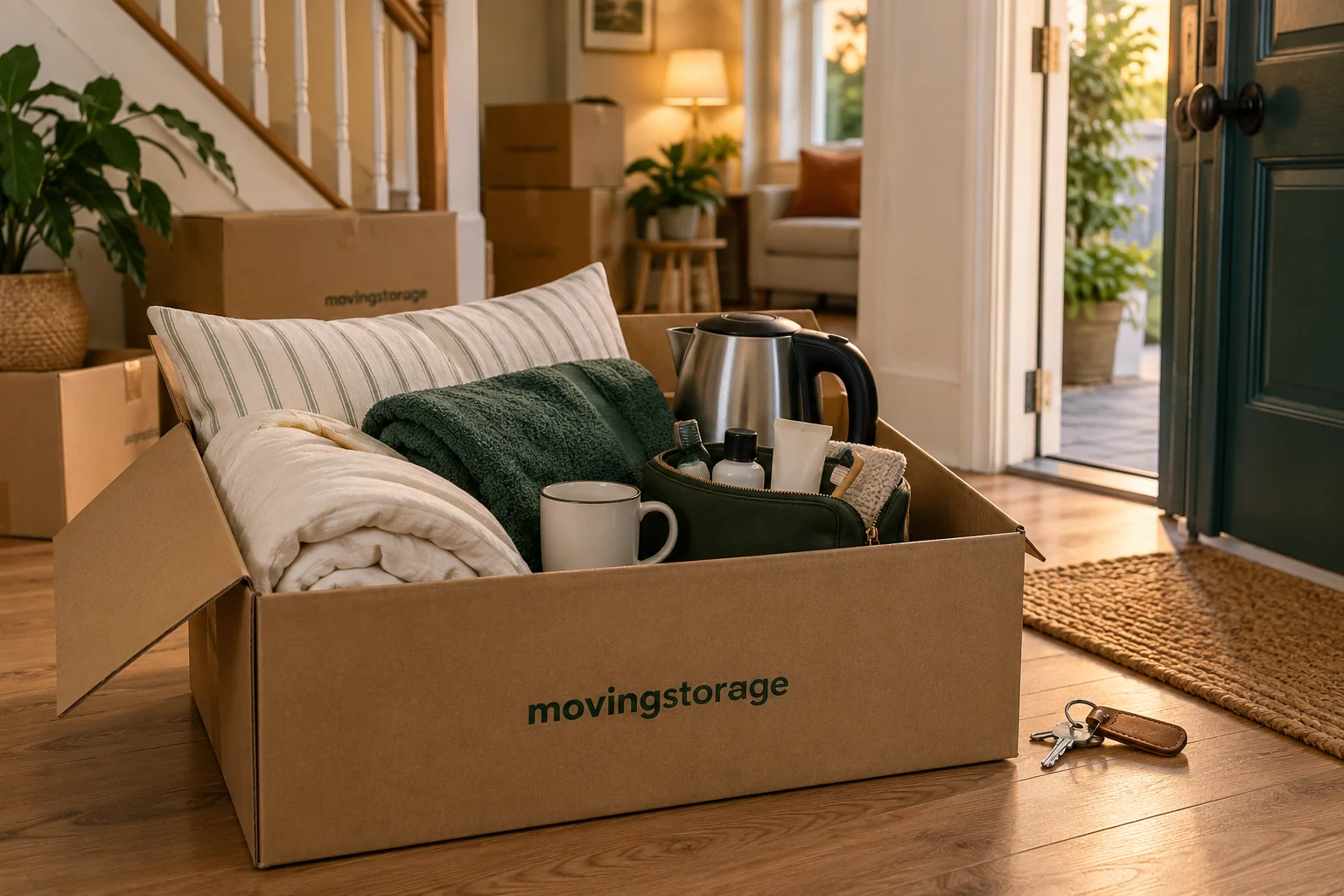
A first-night box holds the things that make your new home usable before the rest of the move is unpacked. Its contents should reflect who is arriving, when they will get there, and what the property already has. The point is to avoid hunting through a load of cartons for the few items you need that evening and the following morning.
Do not put everything important in this box. Identification, medication, keys, and essential documents usually need to stay under your direct control in a separate bag. The first-night box is the practical household kit around that bag. Decide who will carry it and where it will go on arrival, then keep it away from the cartons waiting to be loaded with the rest of your belongings.
Plan around the actual arrival
Picture the period between unlocking the door and going to bed. You may need to wash your hands, use the bathroom, charge a phone, feed a pet, make a simple meal, and find somewhere to sleep. Write those activities down in the order they will happen. That short sequence is a better starting point than copying a large list of supplies that may not suit your household.
The time of day matters. An afternoon arrival may leave room to collect groceries or assemble a bed. A late arrival after a long drive calls for a simpler plan, with food already available and bedding easy to reach. If only one person arrives first, their kit may look different from the box needed when children, a partner, or other household members follow later.
Check what the property includes rather than assuming. A furnished rental may still lack towels, usable bedding, or basic kitchen items. A newly completed home may require more initial cleaning than expected. A previous occupant's statement that something will remain is not the same as seeing it in place. When possible, confirm the essentials during the final property arrangements so your box fills the real gaps.
Separate the personal bag from the household box
Keep personal essentials together in a bag you can reach during travel. Include the items each person needs for their own normal routine and any documents needed to access the property or manage the move. Consider what would cause difficulty if the main delivery arrived later than expected. The answer will usually identify things that do not belong on a moving vehicle at all.
For a fuller travel-focused list, use the guide to what to keep with you on moving day. Give each container a clear role. The bag travels with the person, while the household box goes directly to an agreed room in the new home. Mixing those roles can leave a vital personal item buried underneath cleaning products or kitchen supplies.
Do not label the outside with sensitive details or advertise valuable contents. A plain identifier such as “arrival kit” can be enough when everyone involved knows what it means. Keep a private contents list with your moving notes. If someone else is responsible for carrying the kit, explain why it must remain available and confirm that they have a way to reach you if plans change.
Make the bathroom usable first
Bathroom supplies are often needed before any other room is unpacked. Pack toilet paper, hand soap, a towel, toothbrushes, toothpaste, and the normal toiletries you expect to use that evening. Add the specific supplies your household requires rather than building a generic collection of spare products. Choose containers that close securely and keep any liquids separate from paper, textiles, and electrical items.
Think about the bathroom's physical setup as well. If the shower needs a curtain, hooks, or another removable part, confirm whether those are already installed. Pack the missing pieces only after checking the property. Keep a small bag for used towels or clothing so the new bathroom does not immediately become a mixed pile of clean and dirty belongings.
Use original labelled containers for cleaning and personal products. Follow the product instructions, keep incompatible products apart, and do not decant substances into unmarked drinking containers. Ask your transport provider about restricted items if the kit is not traveling in your own vehicle. If a product cannot travel safely under the arrangements you have made, plan to obtain it at the destination instead.
Prepare for sleep without a complete bedroom
Pack the bedding you will actually use, including pillows and any normal sleep-related items for the people arriving. Group complete sets together rather than placing all sheets in one bag and all pillowcases in another. If the bed needs assembly, keep the appropriate instructions and hardware accessible, and make sure the work can be completed safely before the household becomes tired.
A mattress is not guaranteed to arrive when you do. Decide what you will do if the main delivery is delayed or if assembling furniture takes longer than expected. This could mean arranging temporary accommodation or using another appropriate sleeping setup already available to you. The first-night box cannot solve a missing bed, so distinguish a packing task from a booking or access decision.
Keep a change of clothes close to the bedding kit, along with the clothing needed for the next morning. Put used travel clothes somewhere separate once you change. If several people share one large kit, use smaller clearly labelled bags inside it. That avoids tipping the whole box onto the floor when one person needs a particular item after everyone else has settled down.
Choose food that needs little equipment
The first meal should fit the kitchen you expect to find, not the kitchen you hope to unpack. Consider water, a simple ready-to-eat option, and the few utensils or cups needed to serve it. If you plan to order food, check that the address is recognized and that someone will be available to receive it. Keep a backup that does not depend on an exact delivery time.
A kettle or coffee maker is useful only if it is accessible, suitable to use, and accompanied by the other items your routine needs. Avoid filling the box with appliances just because they are part of an ordinary morning at home. Ask whether a simpler alternative will do until the rest of the kitchen is unpacked. Choose a small number of items you can clean and put away easily.
Plan food storage according to the foods involved and the facilities actually working at the new property. Do not treat the moving box as a substitute for safe temperature control. If you are carrying anything perishable, follow appropriate food-safety guidance and make arrangements that fit the trip. When that is uncertain, buy suitable food locally rather than keeping an elaborate meal plan alive through repeated delays.
Include a small, purposeful cleaning kit
You may want to wipe a counter, clean a bathroom surface, or deal with a minor spill before unpacking. Choose a compact set of appropriate supplies and cloths, taking account of the surfaces in the property. Read labels and keep products closed and secured in transit. Avoid carrying a broad collection of chemicals when a smaller kit or a local purchase will handle the immediate tasks.
Include a few bin bags and a way to collect ordinary packing debris. They are easy to overlook because they are not part of a room's contents. Decide where waste can be placed under the building or local collection arrangements. If you arrive late, a clear temporary collection point is better than leaving loose tape, wrapping, and torn cartons across rooms that people need to walk through.
Keep cleaning supplies apart from food, medication, personal care items, and bedding. Use separate smaller containers inside the kit if needed, without creating a box so full that you cannot see what is in it. Any item that leaks should be dealt with before the container is closed. Replacing a problematic bottle is usually simpler than trying to rescue everything around it after arrival.
Keep the small tools genuinely small
A few ordinary tools may help with an immediate task, but the first-night box is not the place for an entire workshop. Select items based on the work you expect to do and your ability to use them. Keep sharp edges protected and any small components secured. If a bed or other essential item needs a specific tool, check that tool before departure rather than assuming a general kit contains it.
Charging cables and a suitable power strip may be useful if they are safe, compatible, and appropriate for the property. Do not overload electrical equipment or improvise around a fault in the new home. A phone power bank can help during travel, but follow the device and transport instructions that apply to it. Any concern about an electrical installation belongs with an appropriate professional, not a late-night unpacking experiment.
Put a torch somewhere accessible rather than underneath the entire kit. You may need light in a cupboard, parking area, or unfamiliar corridor before rooms are organized. Do not rely solely on a phone that is nearly discharged from travel. Small practical choices like this make the kit useful because you can reach the item at the moment it is needed.
Account for children, pets, and different routines
The person making the list may not know everything another household member needs. Ask each person to name the items they would use before going to bed and soon after waking. Include routine aids, comfort items, or suitable food as needed. Where a child is involved, keep their most important arrival items together instead of distributing them through the adult household kit.
For a pet, keep the appropriate food, bowls, lead or carrier supplies, waste materials, and familiar items close at hand. Establish a safe, quiet area while doors are being opened for the move. The pet's needs may require a separate transport plan or advice from its veterinarian. Do not assume that putting a blanket in the box settles the wider question of how it will cope with arrival.
Accessibility matters too. A kit that is light for one person may be awkward for another, especially after travel. Split supplies into manageable containers and make the labels easy to read. Place the kit on a reachable surface at the new home. Avoid a system that requires lifting a heavy box to reach one essential item several times during the evening.
Pack and identify the kit before the final rush
Start setting items aside while ordinary packing is still under control. Use a contents list and tick items off only when they are physically inside the kit or assigned to a separate personal bag. For things still needed at the old home, leave a short final-morning note with their exact location. This reduces the chance that the soap, chargers, or favorite pillow gets packed into another carton at the last minute.
Mark the kit on more than one visible surface and keep the wording consistent. Make sure the people helping know it is not part of the general loading order. If several containers make up the arrival kit, number them clearly and keep a count. A small collection of correctly identified boxes works better than one oversized carton that no one can carry comfortably.
Decide where the kit will be placed when you arrive, then tell the person helping to unload it. A kitchen counter or an agreed corner of the living area may suit, provided it does not block access. Once inside, open the kit deliberately and keep its contents together. Avoid scattering tools and toiletries through an unfamiliar home before you have enough light and time to organize them.
Use the first night to set up the next morning
Before settling down, check that the keys, phone, next day's clothing, and essential documents have a known place. Make up the beds, clear a route through the rooms you will use, and prepare whatever you need for breakfast. This is a short practical reset, not a demand to make the whole property presentable after a tiring day.
Leave the rest of the cartons until you can follow a sensible sequence. The unpacking plan can help you choose which room to tackle next without turning every box into an open container at once. Keep a running list of genuine gaps you discover. It is easier to buy or retrieve a missing item from a specific list than from the general feeling that nothing is where it should be.
After the first morning, empty and retire the kit instead of letting it become an unlabelled catch-all. Put tools, toiletries, and kitchen items in their permanent places as those areas become ready. Keep the contents list for a later move if it proved useful, but revise it for the household you actually have then. The best first-night box serves your arrival, not a fixed version of how every move should work.