
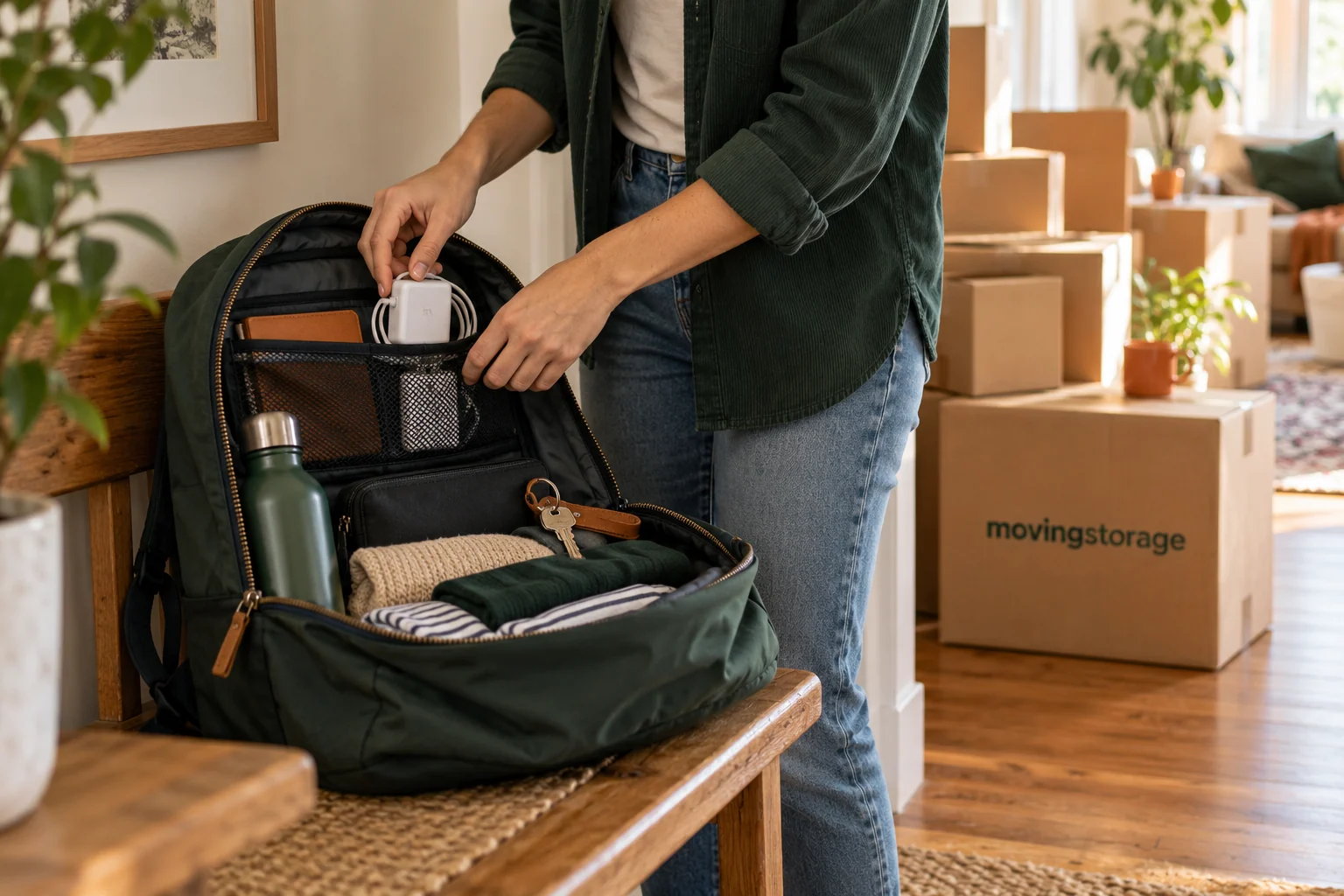
Pack a moving essentials bag for the time when you cannot reach your household shipment. That period may last a few hours, several days, or longer if travel and delivery do not line up. Begin with what each person needs to function through that gap, then add the documents and tools you need to manage the move itself.
The bag should travel with you through a route you can actually manage. A heavy tote that cannot be carried alongside a child, pet, or other luggage is not a workable plan. Divide the contents into personal daily-use items and a small shared moving folder. Keep the most important items easy to reach without unpacking everything in public.
Plan for the gap in access
Write down when the crew may collect the shipment and when you expect to regain access. Include travel, temporary accommodation, storage, and any uncertainty in the delivery window. Do not use the driving time between the addresses as the only measure. Your belongings may travel on a different schedule from the people in your household.
Think through a normal day during that gap. List what you need to wake, wash, dress, eat, work, care for dependants, travel, and sleep. The list will be different for a person moving alone by car and a family taking a flight. Use the actual routine rather than copying a generic bag without checking whether it fits the household.
Set a practical backup if access takes longer than expected. This might mean the ability to wash clothes, buy ordinary supplies, or arrange additional medication through the appropriate professional. Avoid putting every possible possession in the bag. Identify what would cause a serious problem if unavailable and what can reasonably be replaced during travel.
Keep identity and access documents under your control
Carry the identity documents required for your journey, property access, and any planned appointments. Keep the originals in a secure place you can reach. Do not place them in a carton simply because it has a clear label. A label helps locate a box after delivery; it does not make the box available while the shipment is elsewhere.
Keep property keys, access devices, gate instructions, and appointment details together without exposing them to unnecessary people. Check which keys belong to the current home, which belong to the new one, and which must be handed back. A small labelled pouch can prevent a handover key from being left in the personal bag by mistake.
Make appropriate backup copies of important information using the household's normal privacy and security practices. Keep sensitive documents off publicly shared lists and unprotected photos sent to a group chat. If another person needs a particular page, send only what is needed through a suitable channel rather than circulating the whole moving folder.
Build a small working file for the move
Include the service agreement, estimate, current inventory, pickup and delivery instructions, and the company's verified contact details. Record the name or reference used for the booking. Keep the information available even if a phone battery fails or mobile service is poor. A compact paper contact sheet can help without requiring you to print every attachment.
Save the actual documents in a way that lets you open them offline where your device supports it. Check the files before the move; an email link that requires a fresh login may not be enough. Keep the current version and mark superseded instructions so you do not give a driver an old address or outdated access code.
For an interstate household move, the FMCSA moving checklist is an official reference for document and inventory checks. Use the relevant provider instructions for your own service. Keep a place in the file for new records given to you at pickup and delivery rather than folding them into a pocket where they become separated.
Keep medication and essential care items available
List the medication, medical devices, and personal care supplies each person needs while travelling and before the shipment arrives. Ask the appropriate clinician or pharmacist about timing, storage, transport, and replacement questions. Follow their advice and the product instructions. Do not change a care plan to fit the packing schedule.
Check power, charging, and access needs for any device. Plan around the actual journey and accommodation rather than assuming every stop has a suitable outlet or setup. Carry the instructions and contact details you may need, while protecting private information. If the journey involves a carrier or a border, check the applicable current requirements through the official source.
Assign responsibility for shared or dependent-care items. One adult should know where the relevant bag is and how it travels at each handover. Avoid a situation in which everyone assumes someone else has packed it. Check the bag again before the last cupboards are sealed, while missing items are still easy to retrieve.
Pack clothing for use rather than for display
Choose clothes for the weather, travel, and activities expected during the gap. Include a change that stays separate from the clothes worn during loading. Moving day can leave clothes dirty or wet, and a change packed at the bottom of the shipment will not help at temporary accommodation.
Keep toiletries and a towel accessible if your accommodation or new home will not provide them. Use containers suited to travel and keep liquids away from documents and electronics. Follow any carrier restrictions that apply to your route. Do not assume that a bag travelling by air can be packed in the same way as a bag staying in your car.
Pack a practical amount based on access to laundry or replacement supplies. A carefully selected few days of clothes may be easier to handle than an overloaded case. If someone needs a work uniform, school item, or clothing for a fixed appointment before delivery, place it on the individual list explicitly.
Keep power and communication simple
Carry the phone chargers, cables, adapters, and other ordinary equipment you need for the devices travelling with you. Match each cable to its device before packing. An extra cable is useful only when it fits the device and can be used through the journey's permitted power arrangements.
Save the key contact details outside a single messaging thread. Include the mover, the receiving person, property access contacts, and your travel arrangements. Make sure the provider has a number you will monitor. If the household is travelling separately, agree who handles moving updates and how significant changes will be passed on.
Check any battery-related transport requirements with the relevant carrier or official source before flying or shipping equipment. Do not put an unfamiliar battery or device into a bag based on a general packing tip. The correct arrangement depends on the item and the journey, and the essentials bag should not become a way to bypass a restriction.
Include the small items that keep a day workable
Consider drinking water, suitable food for the journey, a refillable container where appropriate, tissues, and basic hygiene items. Plan around your travel method and access to shops. The purpose is to avoid relying on an unopened kitchen carton for every small need, not to recreate the whole kitchen inside one bag.
Keep a pen, a small notebook, and the measurements or room plan you may need at delivery. If you carry a basic tool kit, consider the route's restrictions and whether the item is actually appropriate in personal luggage. Specialist disconnection or assembly work should remain with the qualified person or booked service rather than being improvised from the bag.
For temporary accommodation, check what is supplied before duplicating bulky items. For arrival at an empty home, consider the basics needed to use the bathroom and prepare a simple meal. Keep those first-home items grouped so you can distinguish them from the documents and valuables that need to remain under closer control.
Give children and pets their own routine items
List the ordinary care items needed for each child during travel and the first stop. Include clothing, feeding or hygiene supplies as appropriate, and a familiar quiet activity or comfort item. Keep the selection manageable and accessible. Do not seal a well-used comfort item in a household box because it happened to be on the bed during packing.
For a pet, plan the equipment, food, water access, records, and care arrangements suited to the animal and journey. Ask the veterinarian about relevant health or travel questions and follow the transport provider's rules. Keep the pet's items apart from the moving load so they remain available when the crew's doors and gates are open.
Agree who carries each bag at each stage. A bag that begins in one car may need to reach a different person at an overnight stop. Put the handover on the plan instead of assuming the household will stay together throughout the day. Keep dependent-care responsibilities clear while other adults deal with the crew.
Separate the essentials bag from the first-night box
The personal bag stays with you. A first-night box may contain the household items you want first once you have access to the destination. Decide whether that box also travels with you or arrives as part of the shipment. Its label should not imply availability before the vehicle carrying it arrives.
The first-night moving box guide covers the household setup in more detail. Use the two lists together and remove duplication. For example, keep your personal toiletries in your bag while placing shared bathroom supplies in the arrival group. Clear roles for each container prevent every item from being described as essential.
Mark the personal bags as staying with you and put them in a separate, agreed area before loading begins. Tell the crew leader which area is excluded from the shipment. Do not leave a personal suitcase among cartons in the hall and expect the crew to infer that it belongs in your car.
Test the bag before moving morning
Walk through a few ordinary tasks using only the packed bag and the supplies already assigned to travel. Can you find your identification, call the mover, charge the phone, access care supplies, and change clothes without reopening a room? A quick test reveals gaps while the rest of the home remains accessible.
Check the weight and number of containers against the way you will travel. If one person must also manage children or a pet, reduce the load or assign help. Keep items you need during the journey near the top without leaving private documents visible. Choose a bag you can close securely rather than an open basket of loose objects.
Make a short final collection list for items still in use, such as a charger, glasses, or morning medication. Keep the list with the bag and check it before the crew starts. Avoid repeatedly adding unplanned household objects until the bag becomes too full to carry or search.
Keep control through pickup and arrival
Move the personal bags to the agreed transport before the loading work makes rooms busy, provided they remain secure. Keep the working moving file with the person attending pickup. If another representative takes over, hand over the current documents and tell them where the relevant contact information is.
At the destination, keep essentials in a clear area while the shipment is unloaded. Use the first-week plan to decide which household groups to open next. Do not let the essentials bag become the place where every receipt, loose screw, and unpacked object is dropped. Give new moving records their place in the working file.
Once the shipment has arrived and the immediate checks are complete, return important documents and care supplies to their normal secure locations. Review any remaining temporary arrangement, such as an overnight bag kept for a later storage collection. The essentials bag has done its job when it kept daily life and moving administration available during the period your household goods could not.
Recheck the plan when the household travels separately
If one adult drives to the new address while another stays for pickup, make two usable personal sets rather than one shared bag that follows the wrong person. Put the moving documents with the person attending the crew and make the relevant destination information available to the receiving person. Decide which original documents must stay with whom and share appropriate copies without exposing private information unnecessarily.
Do the same for a child or pet travelling with one group before joining another. The care items need to follow the person or animal through each handover. Write the handover into the travel plan and check it before the cars leave. A well-packed bag is of little use if it reaches the right address several hours after the person who needs it.
After pickup, review any change to the delivery window and adjust the daily-use plan. Confirm accommodation, access to ordinary supplies, and the contact number the mover should use. Keep this review focused on the period without the shipment. You can simplify the bags once the household is together and normal access to belongings has returned.