
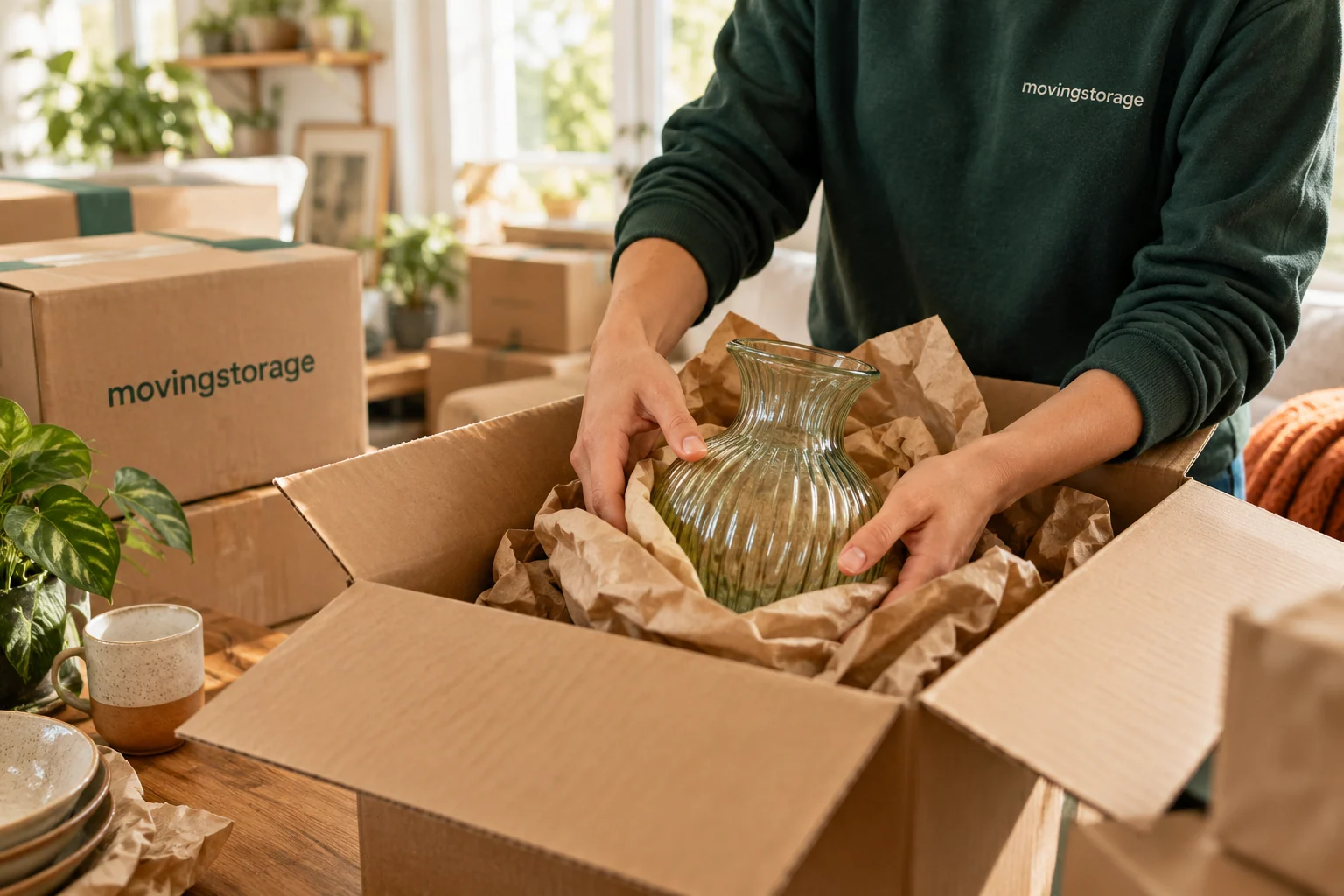
A fragile label tells someone that care is needed. It does not stop two hard surfaces striking each other inside a box, protect a projecting handle, or make a weak carton stronger. Start by deciding what makes each item vulnerable. A thin glass rim, a loose frame, a polished finish, and a heavy stone base are different packing problems. The container and protection should answer that problem instead of applying the same layer of wrapping to everything on the shelf.
Set up a clear surface before handling the pieces. Use enough space to lay an item down without balancing it on the edge of a table or over another object. Keep the working area separate from the route through the room, and put finished parcels somewhere stable. If an object cannot be handled confidently because of its size, condition, weight, or value, stop and arrange suitable help. Packing it yourself is not a requirement for finishing the room.
Identify the weak points before choosing a box
Look at the whole object, including its underside and attachments, without taking it apart unnecessarily. Note a repaired joint, loose lid, thin neck, projecting foot, or decorative element. Some pieces look robust from the front but have a fragile connection underneath. Check the maker's guidance where it is available. If you do not know the material or how a surface will react to a wrapping product, do not experiment on the visible finish during the last evening before the move.
Separate items that can be packed using ordinary household methods from those needing an agreed specialist approach. Large glass pieces, complex antiques, sensitive artwork, and objects with existing damage may need a purpose-made container or professional assessment. Give the provider photographs and measurements early, including the maximum dimensions rather than only the base. A tall projecting detail can determine the required container even when the rest of the object is compact.
Do not use price as the only reason to choose specialist help. An inexpensive object may be impossible to replace for personal reasons, while a bulky decorative piece may be easier to replace than to transport. Make the decision with the people who own the belongings. Record what you intend to move, what will travel with you under a separate plan, and what will be left out. Clear choices prevent packing materials and time being spent on pieces the household has not agreed to take.
Record condition without turning packing into a photo project
Photograph each unusual or important item before wrapping. Capture the overall piece and any details that distinguish it, such as an existing chip, repair, serial number, or maker's mark. Make the photographs easy to locate by using the same item number in your inventory. A folder full of unnamed close-ups is difficult to use when you need to work out which wrapped object it shows. Keep the record private and backed up somewhere you can reach during the move.
Write a short condition note in ordinary language. “Small chip under the rear left foot” is more useful than “fair condition,” because it describes a location someone else can check. Do not remove or alter existing marks just to improve the photograph. If a mover prepares its own condition record, review that separately and raise questions before signing. Your photographs help you remember the item, but they do not replace the provider's paperwork or the agreed terms for loss and damage.
Plan the return from wrapping as carefully as the wrapping itself. Note whether a lid or removable component has been packed separately and identify its carton. Put an opening note near the top if the unpacker must remove a particular layer first. This is especially helpful when the person unpacking is not the person who prepared the item. A small note can prevent someone lifting a bundle by a part that was never intended to carry the object's weight.
Choose a container with room for protection
Select a clean, dry, sound container appropriate to the object and the intended journey. Check the base, seams, corners, and any signs of previous moisture or crushing. Do not treat a box that once carried a heavy product as suitable forever. Its condition now matters more than what was printed on it. If the item requires a specialist carton or crate, ask who supplies it, who packs it, and whether the price and responsibility are included in the written service scope.
The container needs enough room for suitable cushioning around vulnerable surfaces, but an unnecessarily large empty volume creates another problem to solve. Do not choose the biggest available carton and fill it with a pile of mixed objects. Work from the item outward: separate protection for the surface, support for its shape, and protection from the container and other contents. Ask the packing supplier or specialist about materials where a surface is delicate or conservation-sensitive.
Avoid packing a very heavy object with light fragile pieces simply because the shapes fit. The weight and movement of the heavy item can affect the lighter pieces. Give it a separate container or an appropriate method agreed with the provider. The same rule applies to mixed contents that need different handling or opening methods. A carton should be understandable to the person moving it, not a puzzle of unrelated loads held together by optimism and tape.
Wrap separate pieces as separate pieces
A set may look like one object on the shelf but still need to travel as several protected parts. Check whether a lid, tray, stand, or attachment is intended to be removed. Remove it only when you can do so safely and in accordance with relevant instructions. Wrap each loose part separately, identify the parent item, and prevent direct contact between the components. Do not leave a loose lid resting in place under the outer wrapping and assume it will stay there.
For ordinary glass and ceramic household pieces, use clean material suitable for the surface and separate each item from its neighbours. Pay attention to handles, rims, and feet when building the protective shape. Do not tie wrapping so tightly around a narrow projection that the wrapping itself puts pressure on it. If a hollow shape needs support, the material should be placed without forcing it into the object. The person unwrapping should be able to remove it without pulling on a delicate part.
Keep the wrapping identifiable as you work. A plain paper bundle can hide whether it contains a sturdy bowl or a thin stemmed glass. Add a short note before the bundle leaves your hand if its contents or opening direction matter. Avoid attaching tape directly to a finished surface. If a coating, gilded area, textile, paint layer, or adhesive-sensitive material is involved, seek the right material advice rather than treating it like an ordinary drinking glass.
Control movement inside the carton
After separating the pieces, assess what can shift inside the closed carton. Empty spaces can allow a protected object to move into a new position where its vulnerable point meets another surface. Use suitable cushioning or dividers to hold the intended arrangement without compressing delicate parts. Inspect the corners and the top as well as the base. A thick cushion under an item does not protect a handle that touches the side wall.
Before sealing, review the arrangement while the container remains on the work surface. Do not perform a vigorous shake test with fragile contents. You should be able to understand the support and separation by looking at the packing method and checking it gently. If you cannot tell whether a piece is supported, ask for help or repack it. Testing the strength of an uncertain arrangement by creating the movement you are trying to avoid is not a useful last step.
Think about access at the destination. Dense layers of unidentified padding can make the object difficult to locate safely. Use a clear sequence and a top note where needed. Keep small protected parts together in a marked inner container that suits them, so they do not disappear among loose wrapping. If there are several inner containers, number them and record that count in the main carton notes. That way the unpacker knows when all parts have been found.
Give unusual materials their own decision
A decorative item made from several materials may need more thought than a single-material object. Wood, glass, metal, paint, paper, fabric, and adhesives can respond differently to pressure and contact. Do not assume a material that worked for one surface is suitable for another. If the item is valuable, historic, damaged, or unusually sensitive, contact an appropriate conservator or packing specialist before choosing what will touch it. Bring photographs and explain the transport and possible storage period.
For framed artwork and mirrors, use a separate plan that considers the frame, surface, glazing, fittings, and overall dimensions. A generic fragile-items box is rarely the place to start with a large flat object. The artwork and mirror packing guide explains the questions to settle before wrapping, including when specialist packing should replace a household method. Do not improvise glass or art handling around an assumption that a tight outer layer will hold an unsound piece together.
Items containing liquids, batteries, compressed gas, or other restricted components also need provider approval and appropriate instructions. Their fragility is only one issue. Ask what may be accepted and how it must be prepared before packing it with ordinary household objects. A fragile label is not a declaration of hazardous contents and cannot substitute for one. If the provider declines an item, choose a lawful alternative or an appropriate disposal route rather than disguising it inside another carton.
Write labels that help the next person
Put the destination room, carton number, and a clear fragile instruction where someone can read them while the box stands in its normal holding position. Mark more than one visible face if the carton may be placed with one side against a wall. Keep the important words large enough to read at a short distance. A label with attractive decoration but tiny handling instructions is less useful than a plain clear note.
Use orientation labels only as part of the method the provider accepts, and ask about any unusual handling needs. Do not assume arrows ensure a particular orientation throughout a journey. If an object depends on remaining upright, that is something to discuss explicitly before booking and loading. Write the agreed instruction into the item's packing or service notes. Unstated expectations are especially difficult to resolve after several people have handled the shipment.
Keep sensitive descriptions and values in your private inventory. The carton can say “living room, fragile decorative pieces, box L12” without listing a collection's value or a detailed description of a valuable item. A separate record can identify the objects inside. Your moving inventory should connect the label with the contents, condition notes, and photographs. The handling label and the private record serve different readers and do not need to contain the same information.
Set the pickup handover before moving day
Tell the mover which fragile items you packed and which you expect it to pack. Get the division of work clear in advance, including materials, dismantling, crating, and any inspection it requires. Ask what happens if the crew considers a container unsuitable at pickup. Knowing the process gives you time to address it before access windows and loading schedules make every change harder. Keep written confirmations with your moving records.
Place completed cartons in a dry, stable holding area where their labels remain visible and they do not obstruct a route. Avoid building a stack that puts weight onto vulnerable containers. Follow the carton and provider's instructions about handling and stacking rather than trying to maximise floor space at any cost. If a piece needs special placement, point it out during the walkthrough and refer to the written arrangement. Do not depend on a hurried verbal reminder to a person who has not seen the earlier discussion.
At delivery, open the priority fragile cartons when you can work on a clear surface and have somewhere safe to put the contents. Count inner parcels before discarding wrapping, compare the items with the inventory, and check condition in good light. Retain relevant packaging and document concerns if something appears damaged, then follow the provider's written process. Careful unpacking completes the protection plan because an undamaged piece can still be harmed by a rushed search through its packaging.
Leave time between the last fragile packing session and pickup to review the finished group. If supplies have run short or a difficult piece remains unresolved, arrange help then. Treating an unfinished fragile parcel as complete creates a problem for everyone who handles it later.