
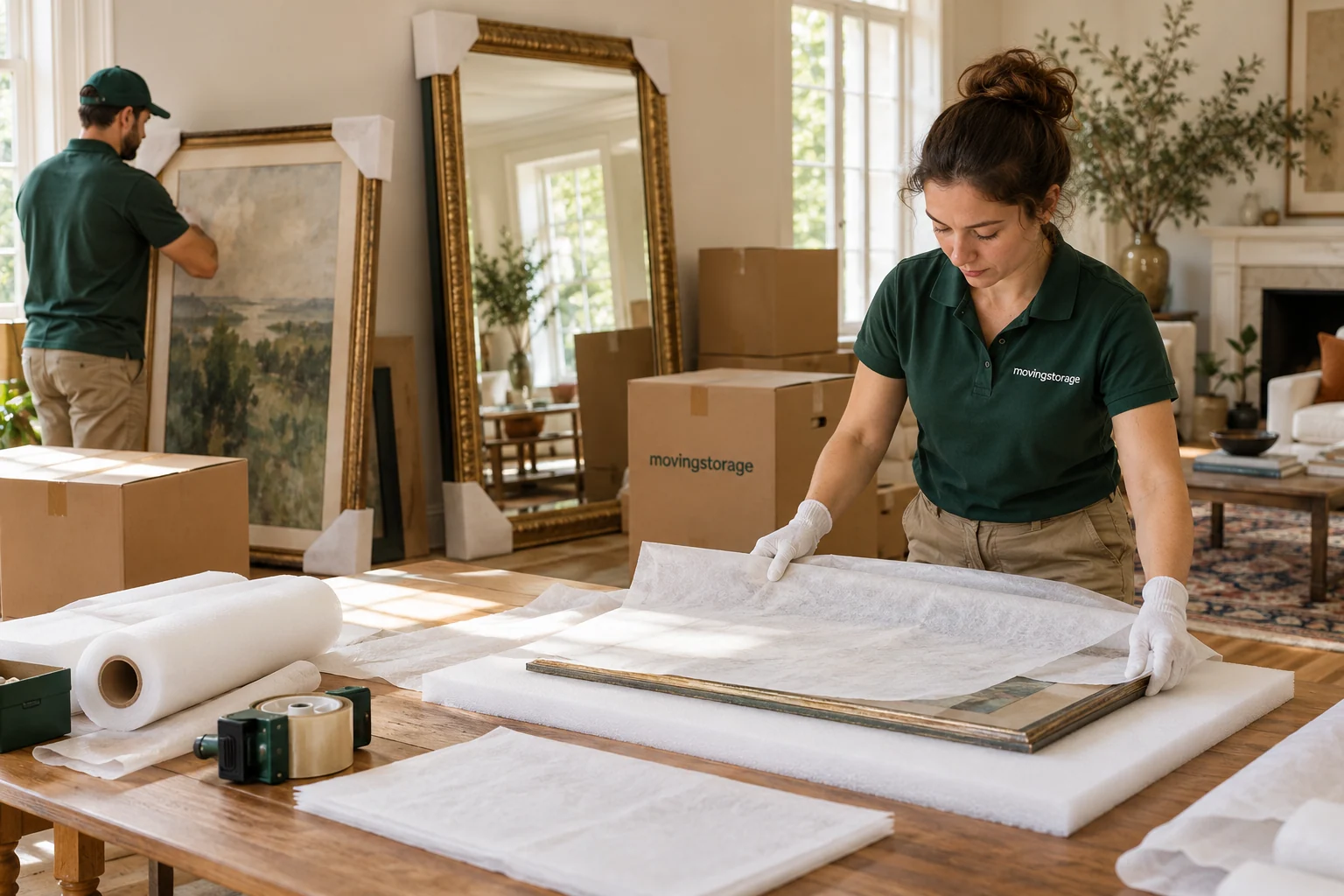
Artwork and mirrors need a packing decision before the wall is cleared. Their size is only part of that decision. A loose frame, exposed painted surface, old repair, heavy backing, projecting fitting, or large sheet of glass can change how an item should be handled. Make an item list and decide which pieces need specialist assessment or packing before buying a general pile of wrapping materials. A method that suits a replaceable framed print may be unsuitable for a fragile original work.
Begin while the pieces are still in their usual positions. Photograph them, note their locations, and record whether you know their materials or construction. Include decorative mirrors as well as pictures. A hallway mirror fixed into a surround, a freestanding mirror, and a small framed mirror on a hook have different removal and transport questions. Do not assume every object can simply be lifted down, wrapped, and placed into the same style of carton.
Make a record that identifies the actual piece
Give each item a plain private reference number. Record the overall dimensions, including the frame, projections, and any fixed fittings that remain attached. Note weight information where it is known from reliable product information; do not guess a precise weight for an awkward object. Take an overall photograph and closer views of distinctive details and existing concerns. The photographs should allow someone to identify the piece without relying only on a vague label such as “large picture.”
Describe existing condition in factual terms. Note a visible loose corner, chip, crack, lifting decoration, or other feature without trying to diagnose the cause. Do not clean, repair, tighten, or alter a delicate object merely to make its condition record look better. If you are unsure whether it can safely be moved, consult an appropriate conservator, framer, manufacturer, or specialist handler. Explain the proposed journey and any storage interval so the advice addresses the whole move.
Keep purchase records, appraisals, ownership information, and condition photographs in a private folder where relevant. These details do not belong on the outside of a carton or crate. Share what is needed with the provider under the arrangements you have agreed. A clear record helps the packing discussion because you can explain which object is being considered, what its concerns are, and which work you expect someone else to perform.
Decide who will remove and prepare each item
Find out how a piece is attached before attempting to lift it. Large mirrors, wall-mounted work, or objects with hidden fixings may need a person with the appropriate equipment and skills. Ask the provider which removal tasks are included and which require a separate appointment. The people transporting an object may not be responsible for disconnecting it, removing building fittings, or making the wall good afterwards. Put that division of work in writing before moving day.
Prepare a clear route and a stable working area for the person doing the removal. Keep furniture, loose cartons, children, and pets away from the immediate work space. Discuss where the item will be placed temporarily once it comes off the wall. An unplanned pause can leave a large fragile piece leaning in a doorway while people decide what to do next. Arrange the receiving surface and the packing method before the item is disturbed.
Avoid using household packing as an opportunity to repair a damaged frame or remove unfamiliar backing. Such work can change the way the object is supported or expose a sensitive surface. Ask the appropriate specialist when the construction is unclear. The Canadian Conservation Institute's guidance on handling paintings discusses the need to assess condition and plan handling before moving an artwork. Its advice concerns art care; it should not be turned into a generic instruction to dismantle every framed item yourself.
Choose materials around the surface
Identify what a protective material will touch. An exposed paint layer, gilded frame, photograph, textile work, ordinary glazed print, and mirror backing may have different sensitivities. Do not apply tape directly to a finished surface or choose a wrapping product solely because it feels soft. Adhesives, texture, ink, static, moisture, or pressure can matter for particular materials. Obtain appropriate advice when the surface is valuable, vulnerable, historic, or unknown.
Use a purpose-made or professionally specified protection system where the piece requires it. Ask who selects the materials, who supplies them, and whether the container will be made to the recorded dimensions. If the original packaging is available for a modern product, inspect its condition and completeness and check that it suits the journey. A saved outer carton without its designed supports may not provide the same protection as the original complete package.
Do not place loose padding against a fragile projection and assume more wrapping improves the result. Protection has to support the object without creating a new pressure point. Explain delicate corners, raised decoration, deep frames, and any unstable parts to the packer. If a piece cannot tolerate ordinary contact, specialist handling is part of the plan. The useful choice may be a different transport arrangement rather than a larger quantity of the wrong material.
Set a separate method for mirrors
Check the mirror's construction and any manufacturer instructions before planning removal or packing. The glass, frame, backing, and fixings all need consideration. A large mirror with a heavy surround is not simply a flat fragile item. Ask a suitable professional about handling when the object is heavy, installed, damaged, or difficult to grip safely. Do not rely on a household tip about putting tape across the glass as a substitute for an agreed protection system.
Measure the full mirror and its route, including turns, stairs, door clearances, and the proposed loading access. Tell the provider about fixed handles, projections, or a fragile frame. If a mirror must be separated from furniture, check the product guidance and agree who does the work. Keep the correct fittings identified and protected. Do not remove supporting parts experimentally while the mirror is still carrying its own weight in an uncertain position.
Keep the prepared mirror in the holding position specified by the person responsible for its packing and handling. Make that position part of the plan rather than improvising a place against the nearest wall. Protect the holding area from passing traffic and other moving work. An object waiting to be loaded may be exposed for longer than you expected, so choose a place that remains usable if pickup is delayed. Ask about any change rather than moving a specialist-packed item without understanding its handling points.
Match the container to the journey
Explain whether the item is going directly to another home, travelling a long distance, entering storage, or being transferred between services. A packing method needs to account for those stages. Ask about the container's design, opening method, handling points, and any inspection expected before acceptance. Get the scope and cost of specialist packing or crating included in the written service arrangement. A verbal mention of “extra care” does not explain who is doing which task.
Ask how the container keeps the object separated from outer walls and other pieces. You do not need to design a professional crate yourself, but you should understand which item it is for and what must remain unchanged. Record whether hardware, stands, or related parts are packed in the same container or another identified package. If a container serves more than one piece, ask how those pieces remain separated and how the unpacker will identify them.
Do not add other household objects to a container made for artwork or a mirror without the packer's agreement. Extra weight or a loose accessory can change the protection method. The same applies to removing a support because it seems inconvenient or makes the package harder to store. Where a specialist has prepared the item, preserve the intended arrangement and contact them if access, timing, or the journey changes before pickup.
Plan holding and loading access
Identify a dry, stable holding area away from door swings and the general path through the home. Keep labels and handling points visible under the agreed method. Do not surround a large protected object with small cartons that someone will have to climb or reach across to collect. Ask the provider whether the object needs a particular loading order and ensure the crew knows where it is during the initial walkthrough.
Include the protected dimensions in the access plan. A picture that fits through a doorway unwrapped may become significantly larger once packed. Measure the route for the finished container where possible. Discuss difficult turns and stairs with the handler before committing to a method. Your large-item access checks can help organise route information, although the handling and protection of art must still follow advice for the actual object.
Weather protection is another part of the route. Discuss how the item will move between the property and vehicle if conditions are wet or windy, and what would cause the work to pause. Avoid creating improvised covers that obscure handling points or interfere with a prepared container. Let the responsible handler specify what is appropriate. The time to decide whether the route can be used is before someone is carrying the object through an exposed space.
Confirm the new location before delivery
Measure the proposed destination and think about access to that part of the home. A large mirror may fit into a room but have no suitable wall position, fixing arrangement, or safe temporary place to stand. An artwork may need time before an appropriate hanging service is available. Tell the delivery team what is ready and what remains undecided. Do not open a large package solely to empty the vehicle if you have nowhere suitable to place its contents.
Confirm who will unpack and install the item. Transport, specialist unpacking, frame work, and wall installation may be separate services. Ask what the provider expects you to inspect at delivery and how to record concerns. If a professional should open the container, keep that appointment linked to the delivery window and leave the item in its agreed condition until then. The same careful handover is needed at the destination as at the old home.
For items entering storage, ask about the actual conditions and any requirements from the packing specialist. Keep the item identified in your private records and plan how it will be inspected or collected later. Do not assume an item is suitable for an environment because the facility uses a general climate-control description. Explain the object's needs and seek advice about materials or conditions where necessary, especially for sensitive art, mixed materials, or an extended period.
Keep the paperwork tied to the object
Use the item reference across the condition photographs, packing order, specialist invoice, and transport notes. Save written instructions and the details of the people responsible for each stage. If more than one company is involved, record the handover points. A later question about a piece should not require reconstructing which provider removed it, which provider packed it, and who accepted it for the next stage of the journey.
Your moving paperwork file can hold those records without publishing sensitive information on a label. The outside of the package should communicate the destination and agreed handling details clearly. Check the provider's records separately and address a description that does not identify the right object. “Framed item” may be too vague for a shipment containing several different pieces with separate packing and condition concerns.
At delivery or professional unpacking, compare the item with its records in good light and document any concern promptly. Keep relevant packaging until the next steps are clear and follow the provider's written process. Avoid cleaning or repairing a newly noticed issue before obtaining appropriate advice if it could affect the record. A careful final inspection closes the packing plan by identifying the object, its condition, its destination, and the work still needed to put it safely in place.
If the hanging arrangement is delayed, set a date to review the temporary location. Keep the item away from general unpacking work and tell the household that it remains under a separate handling plan. Temporary placement can become long-term storage when other tasks take over. A clear review date prevents a protected object being repeatedly shifted around the home without anyone taking responsibility for its final installation.
Keep any borrowed tools, reusable crates, or hired handling equipment on the same closing list. Confirm who collects them and whether removal of packaging is included. Large empty art containers can occupy the access route after the object is installed. Planning their return or suitable disposal keeps the final part of the job from obstructing the room you have just prepared.