
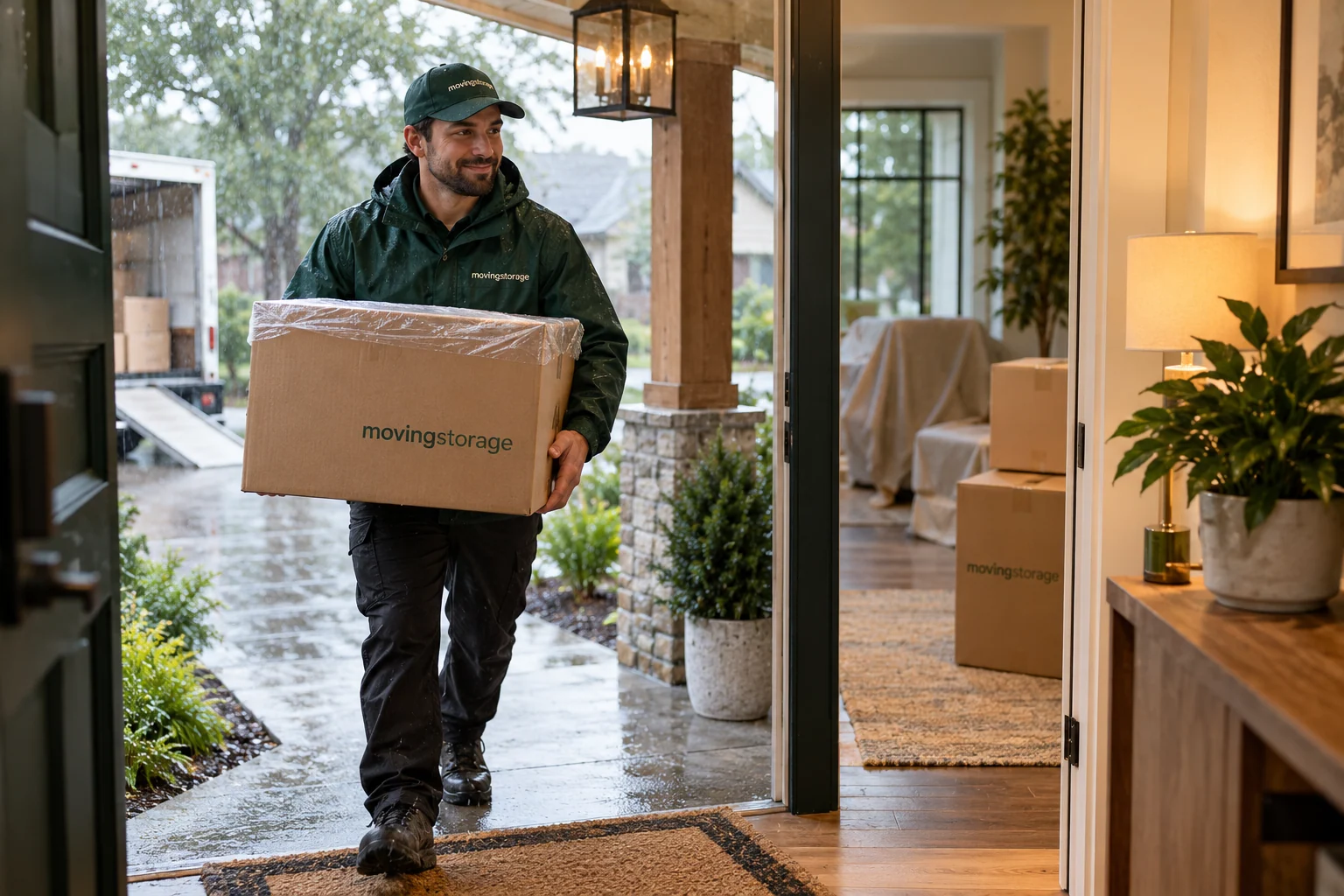
Rain changes the order of a move. Boxes need somewhere dry to wait, people need a clear route, and wet equipment should not bring water through every room. Start by agreeing what will happen if the forecast worsens. A plan for light rain is different from a plan for flooded roads, lightning, or unsafe wind.
Talk to the moving provider before the day arrives. Ask who makes the decision to pause work, how they communicate a delay, and what the contract says about a weather-related change. Do not assume the crew can use a covered loading bay or move the truck closer without permission. Those details often depend on the building, street, vehicle, and other people using the entrance.
Separate ordinary rain from a reason to stop
Check official local forecasts and warnings for both addresses and the travel route. Look beyond the symbol for rain. Strong wind, thunder, coastal flooding, or a rapidly changing forecast can affect a move in ways that an umbrella will not solve. Decide which phone will receive weather alerts and who will keep checking them while other people focus on loading.
The National Weather Service tells people never to drive or walk into floodwater. A scheduled delivery does not change that advice. If a route is flooded, contact the provider and follow local emergency instructions rather than trying to assess the depth yourself. Keep the discussion about property separate from the immediate decision to keep people away from danger.
Avoid making your own promises about a safe level of rain, a safe wind speed, or how long a storm will last. A professional crew must consider the conditions, equipment, site, and company procedures. Your job is to provide accurate information about access and to respond when the crew identifies a problem. If a delay is agreed, record the revised arrangement in writing.
Walk the route before the first box moves
Inspect the path from each doorway to the likely truck position. Look for puddles, loose gravel, fallen leaves, uneven steps, poor lighting, and places where a downspout empties onto the route. Share what you see with the crew. Do not hide a slick patch under a loose towel or an unsecured covering that creates a different hazard.
Ask the building manager which floor protection is permitted. Materials suitable for one floor may not suit another, and a protective layer must stay secure while people carry loads. The crew should approve its working route. Keep fire exits, accessible routes, and shared entrances clear. A stack of dry boxes is still a problem if it blocks a required passage.
At a house, move planters, door mats that slide, and other small obstacles before the crew arrives, when it is safe to do so. At an apartment, confirm whether doors can be held open and who controls them. Do not prop a security or fire door without the building's permission. Rain is not a reason to bypass the rules that govern access.
Create a dry handover area
Choose one indoor area where boxes can pause without blocking the moving route. Near the entrance is useful only if the space remains clear enough to work. Keep this staging area separate from your first-night belongings and from items that will travel in your own vehicle. Give each group a visible label so no one needs to open boxes to identify them.
If a porch, garage, or loading bay is available, confirm its use in advance. Check overhead clearance, doors, drains, and the space needed for other vehicles. A garage full of outgoing items may not have enough room for incoming staging. Sketch the arrangement if several households or deliveries share the same area, then send that plan to the people who need it.
Avoid putting boxes directly onto a surface that is already wet. Ask the crew how it intends to protect cartons during handling and whether the planned packaging is appropriate. A thin plastic cover can shed rain but does not make a weak carton suitable for carrying heavy objects. Materials must support the contents as well as limit exposure to water.
Pack with the route in mind
Finish packing indoors. Seal cartons as directed by the box or packing-material supplier, and keep contents below the box's intended limit. Do not add extra weight simply because you expect more wrapping to keep everything together. Handles, corners, and the bottom of a carton need to remain sound while it is lifted and set down.
Label the destination room on more than one side where it can be read during unloading. If labels may get wet, ask what marking method will remain legible on the packaging you are using. Keep the detailed inventory on your phone or in a protected folder rather than relying on one paper sheet taped to the outside of a carton.
Clothing, papers, artwork, electronics, and upholstered furniture have different preparation needs. Discuss sensitive pieces with the provider rather than applying the same covering to everything. Follow manufacturer or specialist advice when materials can trap moisture or mark a finish. Do not seal an already damp item inside wrapping and assume that the outside cover has solved the problem.
Give wet and dry belongings separate places
Put raincoats, umbrellas, and footwear where they can be used without opening moving boxes. Keep a bag for wet clothing and a separate dry change of clothes. If you are travelling with children or pets, prepare their dry supplies before loading starts. A covered crate, carrier, or bag still needs the ventilation and conditions appropriate for its intended use.
Your moving-day essentials bag should stay with you. Include the items you may need if access is delayed, such as medication, chargers, keys, documents, and a change of clothing. Do not put the only set of house keys inside a carton because the crew is about to close the truck. Mark the bag clearly and keep it outside the loading area.
Plan where people will remove wet outer layers after arrival. Keep towels or cleaning supplies accessible for ordinary water brought in on bags, but do not ask someone carrying a large object to stop in a narrow doorway to change footwear. Coordinate the sequence with the crew. The route needs to work for handling and remain clear throughout the move.
Keep communication short and specific
Choose one contact at each address if you cannot be present at both. Give those people the provider's number, the building contact, and the agreed arrival window. Explain which decisions they may make. They should know whether a box belongs in a dry staging area, but they should not have to guess whether you would accept a different delivery date.
Send factual updates. For example, say that the loading entrance has standing water and the building manager is checking another entrance. Avoid telling the driver to use a route that you have not inspected or an access point that the building has not approved. Photos can help explain a condition, provided taking them does not put you in traffic or bad weather.
If the plan changes, write down the time, person, and decision. Save the relevant message with your move documents. A verbal discussion can be useful in the moment, but a written record makes it easier for everyone to confirm what happens next. Ask for clarification when a proposed change affects storage, labour, access, or the delivery window.
Prepare the destination before unloading
Check that you can enter the new property, turn on the lights, and reach the rooms that will receive furniture. If the power is unavailable, discuss the effect on the work with the provider and building manager. Do not improvise electrical connections or use equipment in conditions its manufacturer does not permit. Keep emergency and provider contact details accessible.
Decide where wet outer wrapping can be removed without spreading water through the home. The crew may have its own procedure for furniture covers and equipment. Ask how you can help keep the route clear. Set aside a container for loose protective packaging so it does not accumulate underfoot as cartons arrive.
Check indoor space before directing everything into one room. A packed entry can force people to move the same box several times. Mark room names on doors or walls using a method that will not damage the surface. If the room layout differs from the old property, tell the crew what each label means before unloading begins.
Inspect damp packaging promptly
Look for soft corners, spreading stains, torn bottoms, or water inside protective layers. Point out concerns during the delivery check and follow the provider's written process for recording condition. Do not sign away a concern because you feel rushed. At the same time, avoid making unsupported statements about what caused a mark if you have not examined it.
Open damp cartons in a suitable dry area as soon as it is practical. Separate contents carefully and follow material-specific guidance. Photograph the carton, label, and affected item before discarding packaging if you may need a record. Keep the item number or inventory reference visible in your notes so the photo can be matched to the right entry later.
Dampness can require different responses for books, upholstery, wood, electronics, and other materials. Ask the manufacturer, a qualified conservator, or another appropriate specialist when you are unsure. Do not switch on an electrical item merely to see whether it still works after possible water exposure. The need to unpack quickly does not replace suitable advice.
Adjust the first evening to the conditions
After a wet move, make the home usable before chasing a complete unpack. Put dry bedding, towels, clothes, drinking water, and bathroom supplies where you can reach them. Give the household a clear place to rest away from loose wrapping and wet equipment. An ambitious room-by-room schedule can wait until the access route is clear and the immediate checks are finished.
Use an unpacking plan to decide which cartons need attention first. Any damp packaging deserves review, but urgency should not turn into a pile of mixed contents with no record. Work through one affected group at a time, keep labels with the items, and note what you have checked. This protects the usefulness of your inventory while you deal with the weather's effects.
Before ending the day, confirm whether anyone must return for packaging, equipment, or a deferred item. Check the revised arrangement with the provider and building, especially if the original access booking has expired. Put any follow-up date in the same calendar you used for the move. A small unfinished job is easier to manage when it has a named person and a clear next step.
Make a practical fallback plan
A weather fallback should answer ordinary questions in advance. Where will you sleep if the move cannot finish? Who can look after pets if you cannot enter the new home? Which documents and supplies must remain in your vehicle? You do not need to predict every outcome, but you should avoid depending on the truck's arrival for every basic need.
If storage might be required, discuss it with the provider before an emergency makes the choice feel urgent. Ask how access, handling, charges, and the next delivery would be arranged. Do not assume that a truck can remain loaded overnight in any location or that a building will extend its loading reservation. Get the options that apply to your particular booking.
Once the weather clears, review what remains rather than automatically resuming the original timetable. Check people, access, packaging, and the condition of the route again. A plan made for dry conditions may need a different sequence after hours of rain. Keep the focus on a workable route, dry staging, clear records, and decisions everyone understands.
Plan a wet delivery in a shared building
Ask the building manager how rain affects the loading area, lift booking, floor protection, and cleanup. A covered entrance may be shared with residents, deliveries, or waste collection. Confirm the approved time and route with the provider, then give the crew the manager's contact details. Do not expect the driver to resolve a building access question while waiting in a restricted position.
Consider where waiting household members can stand without narrowing the work area. Someone holding an umbrella in the middle of a doorway may make carrying harder. Put personal bags in the designated dry area and keep the lift lobby available for its intended use. If the building requires a protective installation, arrange the responsible person before the arrival window begins.
After unloading, check the agreed route for loose wrapping and ordinary water brought in during the work. Report property damage or a persistent hazard through the building's process. Do not use an unfamiliar cleaning product on a shared floor without permission. Agree who removes temporary protection and when the entrance can return to normal use.
If another household's booking follows yours, tell the manager promptly about a delay that affects the shared space. Give confirmed information rather than a guess about when the last carton will arrive. Ask the moving provider and manager to coordinate the next practical step. Keeping the shared route usable is part of finishing the move, even when all your belongings are already indoors.