
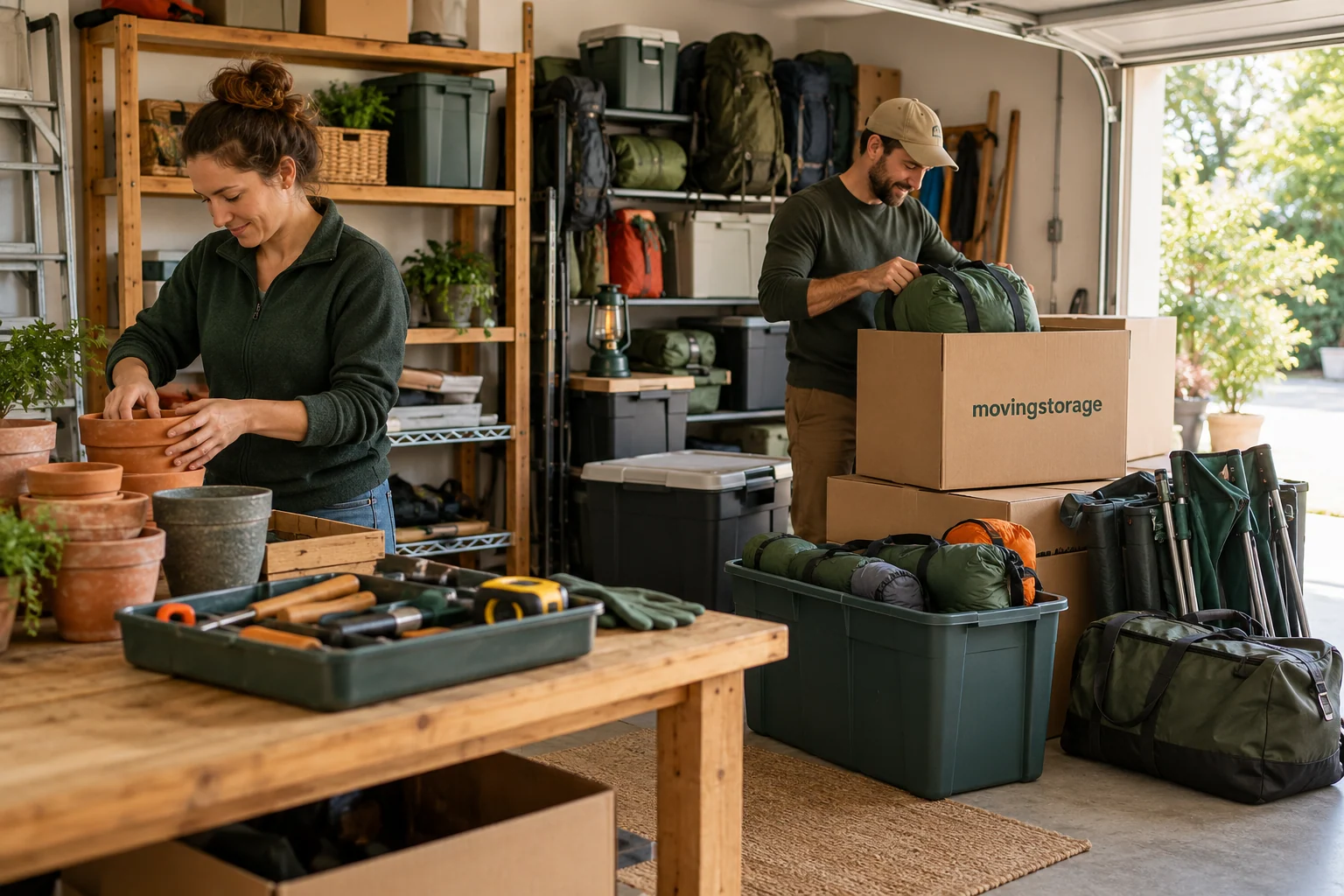
A garage often holds several different moves in one space. Hand tools, garden equipment, sports gear, spare building materials, household chemicals, and unidentified boxes may need separate decisions. Start by sorting those groups and checking what the provider accepts. Do that before wrapping anything that contains fuel, batteries, compressed gas, chemicals, or other restricted materials. A garage packing plan should make those items visible rather than hiding them in ordinary cartons.
Allow a dedicated session for the garage. It is easy to postpone because it sits outside the rooms used every day, but the contents can require disposal appointments, product instructions, specialist preparation, or decisions about bulky equipment. Walk through it early with a notebook. Record items that belong to someone else, equipment you no longer use, and anything you cannot identify. The first useful result is a list of resolved destinations and next actions, rather than a row of sealed miscellaneous boxes.
Clear a safe working area before sorting
Choose a clear part of the garage or another appropriate workspace where you can inspect ordinary items without blocking doors, routes, or access to necessary equipment. Keep children and pets away from the sorting area. Do not place uncertain chemicals, sharp tools, or unstable objects on a casual household packing table. Leave suspect containers alone while you seek appropriate advice. You do not need to handle every unknown product personally in order to make progress on the rest of the garage.
Avoid pulling out the entire contents at once. Work through a shelf, cabinet, or defined floor area and finish its decisions before moving further. This reduces the chance of creating a larger obstruction or losing the labels that identify an item. Take photographs of assembled storage systems before dismantling anything you intend to move. Check whether a shelf, workbench, or wall fitting belongs to the property or is intended to remain under the sale or tenancy arrangements.
Keep the route to the outside clear throughout the work. A garage door that can open above a pile does not make the floor route usable. Think about the path people will take while carrying cartons and how they will see changes in floor level. Agree a holding place for finished packing that does not obstruct the controls, doors, or services that must remain accessible. Ask the moving provider about its preferred loading arrangement before building a wall of cartons in front of the items it needs first.
Give every item a destination
Use clear categories: moving shipment, separately arranged transport, staying with the property under agreement, return to owner, donation if accepted, sale, or appropriate disposal. Make a note of the owner and the next action for anything unresolved. A pile called “maybe” can consume the garage again if nobody reviews it. Give it a deadline that leaves enough time for the chosen route, especially where a collection service or local facility requires an appointment.
Confirm whether a donation or reuse recipient accepts the item in its actual condition. Do not assume that a charity, neighbour, or community group wants a broken tool, an unidentified product, or an oversized machine. Arrange collection or delivery before moving day and keep the items clearly separate from the shipment. If a buyer or recipient has not confirmed, keep a realistic alternative. The moving crew should not arrive to find that the loading route depends on someone collecting a heavy object at an uncertain time.
Check borrowed equipment and rented items with their owners or suppliers. A ladder, specialist tool, cylinder, or garden machine may need to be returned under a specific arrangement rather than transported to the new address. Record the return and obtain whatever confirmation is appropriate. Packing it by mistake creates work at both ends and may leave the actual owner unable to use it. Do not rely on memory when several people have used the garage over a long period.
Identify products that need a separate route
Read the original labels on household products without opening or combining uncertain contents. Ask the moving provider for its restrictions and explain what you have. Paints, oils, cleaners, pesticides, batteries, and similar products may need special handling or disposal. The EPA's household hazardous waste guidance points users toward appropriate local management and warns against unsuitable disposal. Contact the responsible local programme or authority for instructions that apply to your products and location.
Keep products in their original labelled containers while following product and authority advice. Do not decant them into drink bottles, mix leftovers, conceal them in a tool box, or describe them vaguely as garage supplies. If a label is missing or a container appears damaged, seek instructions about the actual condition before attempting to transport it. A moving deadline does not change the need for a suitable route. Set these questions early enough that the garage does not close with uncertain containers still waiting beside the door.
Separate the question of acceptance from the question of preparation. A provider may accept an item only after specified work has been completed, or it may decline it entirely. Ask who is responsible for the preparation and what evidence or confirmation it needs. Follow the equipment manufacturer's instructions and appropriate specialist advice. Do not improvise draining, dismantling, or repair methods for fuel-powered equipment or pressure-containing products from a general household packing article.
Review batteries and powered equipment
Make a list of battery-powered tools and devices, including loose batteries and chargers. Record the model details you can read safely from the product or manual. Tell the carrier what type of equipment you have and ask for its current requirements. PHMSA provides official lithium-battery transport guidance; the applicable method depends on the product, configuration, condition, and transport service. Do not assume that a battery accepted for one travel arrangement is accepted for every part of the move.
Keep any damaged, leaking, swollen, recalled, or otherwise suspect battery or device out of the ordinary packing process and obtain appropriate product safety advice. Do not attempt a repair or hide the condition in a closed carton. If the manufacturer or authority gives instructions for immediate handling or isolation, follow those instructions. The article cannot determine the condition of equipment in your garage, so the right next step is an accurate description to the responsible source of advice.
Match chargers and removable accessories to the correct equipment and identify them before packing. A toolbox full of similar leads can be difficult to sort at the destination. Keep accessories in suitable labelled containers and note their relationship to the tool in your inventory. Follow the manufacturer's guidance about any parts to remove or secure. If you have several tools that share a system, record which components are actually yours, which are borrowed, and which belong with an item being sold or returned.
Pack ordinary hand tools for controlled handling
Sort hand tools by the work you will need before departure, during arrival, and later. Keep the essential permitted tools in a clearly identified kit under the transport arrangement you have chosen. The rest can be packed in manageable groups. Protect sharp edges and points with appropriate covers or rigid protection, and secure that protection so it remains in place. A cloth wrapped loosely around a blade can hide the hazard from the person opening the parcel without reliably controlling it.
Check tool cases before relying on their latches and handles. A case that works while standing on a shelf may not be sound enough for the journey. Do not overload an ordinary carton with dense metal tools merely because there is empty room at the top. Keep the load manageable under the container's limits and the handling arrangements. Use suitable internal protection to stop loose tools striking one another or pressing against the carton wall. Ask the provider about an acceptable container where the contents are unusually heavy or awkward.
Bag and label ordinary fittings by their parent item or project. Mixed screws, shelf brackets, hinges, and unidentified fasteners can become a lasting sorting task if packed together. Keep private or access-related items, such as keys and remotes needed for the old property, outside the general tools shipment until handover is complete. Do not seal the only means of opening the garage inside a carton while you still need access for loading or cleaning.
Prepare bulky equipment before pickup
Measure workbenches, storage cabinets, bikes, exercise equipment, and other large items against the destination and access routes. Decide which pieces are actually useful in the new space. A workbench that suits the current garage may be too deep for the available aisle at the new home. Your large-item access plan can organise dimensions and routes, while the preparation method still needs to follow the equipment instructions and the provider's requirements.
Check manuals before removing pedals, handles, shelves, attachments, or other components. Photograph useful assembly details and label each group of fittings. Where the work needs a specialist or exceeds your ability, arrange that service ahead of the move. Do not leave dismantling as an assumed task for whoever arrives with the truck. Confirm who will prepare, carry, and reassemble each item, and include any unusual access or handling requirement in the written service scope.
Clean outdoor items using a method suitable for the product and allow them to dry before packing. Inspect for soil, pests, moisture, or anything the provider or destination restrictions require you to address. Do not transfer dirty or damp outdoor equipment directly into cartons holding indoor belongings. If the move crosses a border or involves agricultural restrictions, check the relevant authority's current requirements. A familiar garden item can face rules that do not apply to an ordinary indoor object.
Separate sports and seasonal belongings
Pack sports equipment according to its construction and instructions, keeping protective components and accessories identifiable. Separate hard or sharp parts from soft goods and avoid pressure on fragile features. Inspect bags and cases for condition before using them as shipment containers. A carrying bag designed for a trip to a local field may not be a sufficient package for loading with a household shipment. Ask the provider about any equipment you are unsure how to prepare.
Give seasonal belongings a clear record even if they will not be opened soon. A carton of holiday items or camping equipment can remain packed for months, so the label should do more than identify it as garage contents. Record the main groups and any parts stored separately. Keep sensitive gear away from uncertain chemicals, damp materials, or equipment with residues. The fact that items shared the old garage does not mean they should share one closed container.
If the destination has no garage, choose the final or temporary location before pickup. Some belongings may belong in an indoor cupboard, a suitable external store, or a separately arranged storage unit. Check whether the items are allowed in that location and whether the conditions suit them. Avoid making a spare bedroom the automatic destination for every garage carton. That can prevent the room being used and disguise a larger storage decision that still needs to be made.
Label the prepared groups clearly
Use a destination, item or carton number, and a useful content description. “Utility room, hand tools, G05” is easier to deliver than “garage stuff,” especially when the new property does not have a matching space. Add agreed handling information where it is necessary. Keep restricted or separately transported products out of the ordinary label sequence so nobody mistakes them for approved shipment cartons. Labels should describe a decision already made, rather than serve as a substitute for deciding whether an item can travel.
Your moving inventory can record large equipment, serial numbers where useful, accessory groups, and separately arranged transport. Keep those detailed records private while using clear short labels outside. Note anything awaiting a service appointment or disposal confirmation. A completed inventory should let you explain what remains in the garage without opening every container or relying on the memory of the person who last worked there.
Keep the finished groups in a stable, dry holding area with readable labels and a clear loading route. Ask the mover how it wants awkward or separately prepared items presented for inspection. If the crew identifies an unresolved issue, stop that item's loading and agree an appropriate next step. Do not hide it among accepted goods to avoid a delay. The garage is finished when every item has an allowed destination and a workable method, including the items that are not going on the moving vehicle.
Close the garage with a specific final check
After the shipment has left, check shelves, drawers, overhead storage you can access safely, wall hooks, and corners behind large equipment. Confirm the handover arrangements for keys, remotes, manuals, and fixtures staying with the property. Keep any disposal or return confirmations with the relevant records. Do not leave an unidentified product or unwanted machine as a surprise for the next resident. Resolve its agreed route before declaring the property ready for handover.
At the new home, unpack essential tools first and inspect containers before distributing their contents. Set up storage suited to the equipment and follow the product instructions for assembly or installation. Keep products requiring controlled access away from children and pets under the applicable guidance. Record anything still packed and why. A clear garage is easier to maintain when the move ends with known locations and a short list of unfinished tasks, instead of a new wall of miscellaneous cartons.