
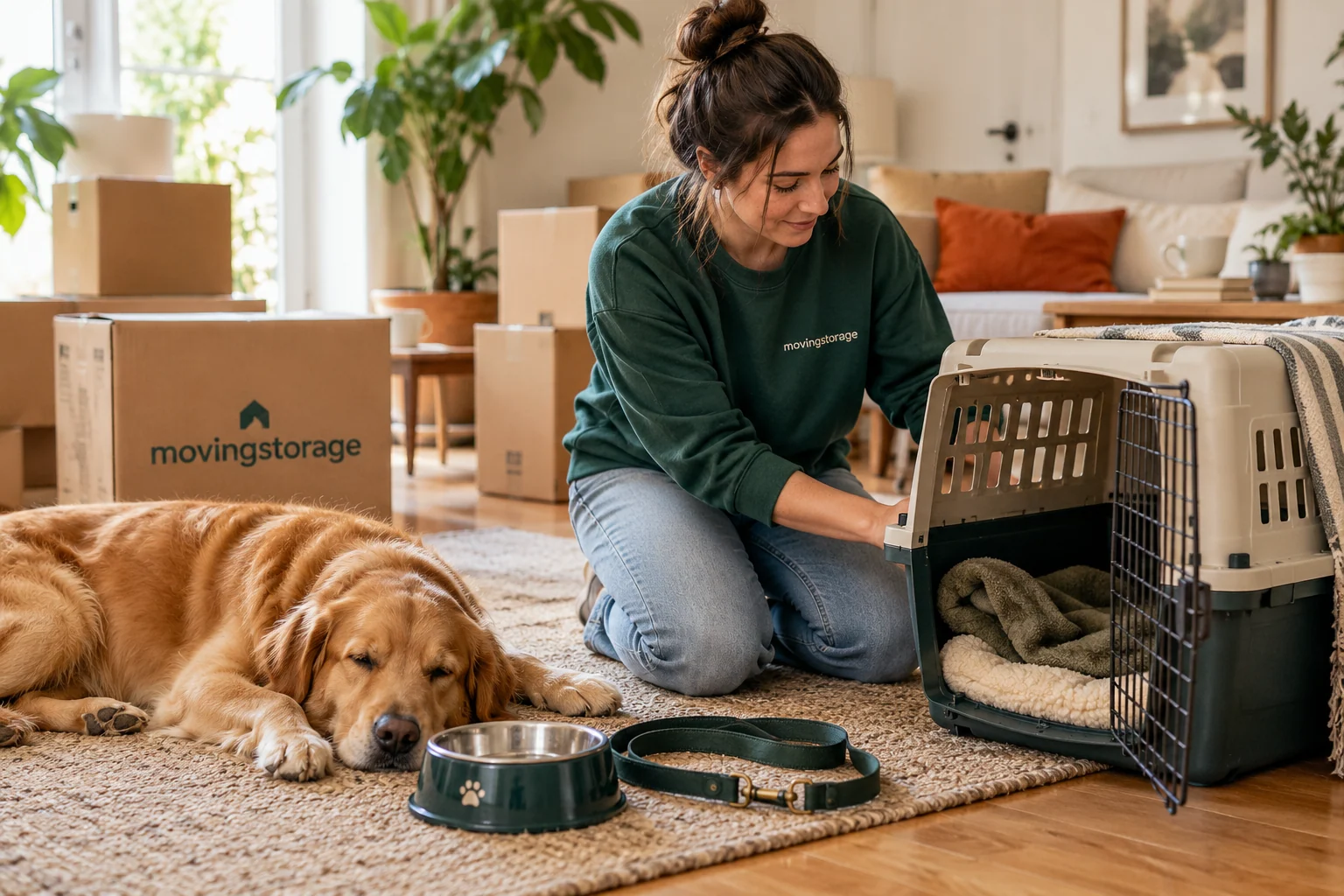
Plan your pet's move as a separate part of the household journey. The pickup crew, open doors, travel arrangements, and unfamiliar destination all need attention before moving day. Start with the animal's needs and the actual route, then decide who is responsible at each stage. Do not assume a pet can follow the furniture's timetable or remain comfortable wherever the household happens to stop.
This guide covers practical organization rather than treatment or veterinary advice. Your veterinarian, the destination's animal-health authority, and any carrier involved are the right sources for requirements specific to your animal and journey. Dogs, cats, birds, reptiles, and other animals may need different arrangements. A plan that worked for a previous pet or a shorter trip should not be copied without checking whether it fits this move.
Check the destination requirements early
Identify the official requirements that apply to the destination and route. For a move between United States states or territories, USDA APHIS explains that domestic entry requirements are set by the receiving state or territory. Its pet-travel page directs owners toward the relevant destination information. Check the current details for your animal rather than assuming that crossing a domestic boundary never requires preparation.
Contact your veterinarian once you know the travel plan. Ask which records, appointments, or other steps are needed and how their timing fits the journey. Keep the instructions written down. Avoid leaving this discussion until the final week, when the household is packing and appointment options may be limited. If your destination or route changes, ask whether the original arrangements still apply.
For international travel, use the relevant official destination and export guidance and work with the appropriate veterinary professional. Do not treat a list written for a different country as interchangeable. Carriers and transit points can also have conditions that affect the journey. Record which authority or company supplied each requirement so you can confirm a question with the right source instead of relying on an old general checklist.
Give one person responsibility for the pet plan
Name the person responsible for records, travel bookings, daily supplies, and handoffs. That person does not have to do every task, but they should know what has been confirmed. If several adults are involved, assign specific actions and dates. A pet's travel arrangements are too easy to leave between the household member booking transport and the one managing the veterinary appointment.
Write a simple timeline from the last ordinary day at the old home through the first few days after arrival. Include where the pet will stay while loading occurs, who will transport it, and who will be present at the destination. If a sitter, family member, or boarding service is involved, confirm collection and return arrangements. Do not plan around an informal offer that has not been checked against the actual dates.
Make a handoff note if anyone else will care for the animal. Include contact details, the agreed routine, where supplies are kept, and what to do if the plan changes. Keep the instructions limited to information the caregiver needs and discuss any health-related instructions with the veterinarian. A clear note supports a conversation; it does not replace checking that the person is willing and able to provide the agreed care.
Confirm travel arrangements with the actual carrier
If a transport company or airline is involved, obtain its current requirements directly. Ask how the animal will travel, which container is accepted, what documents must be presented, and what timing or route restrictions apply. Do not assume a pet-friendly description answers all these questions. Keep the confirmation with the veterinary and destination records so the plan is based on the same animal, route, and date.
Check the whole journey, including transport to the departure point and from the arrival point. A carrier booking does not arrange those connections automatically. Confirm that vehicles, accommodation, or other services used along the way can accept the animal under your intended arrangement. Ask specific questions about parking, access, arrival times, and any relevant limits rather than relying on a general label on a booking page.
If the animal travels separately from the household, agree on how identity, collection, updates, and arrival handover will be managed. Keep the responsible contacts available to both ends. Check what happens if a delay prevents the intended person from meeting the animal. This is a process question to resolve before departure, not something to improvise while the household is also waiting for a furniture delivery.
Prepare the carrier and familiar supplies
Choose transport equipment that meets the requirements of the journey and suits the animal. Ask the relevant carrier and your veterinarian when you are uncertain. Inspect closures, attachments, identification, and the condition of the equipment. Do not discover a broken latch when the doors are open for loading. Keep the carrier accessible during preparation rather than storing it behind packed furniture until the final morning.
Where appropriate for your animal, introduce the travel equipment before the move and ask your veterinarian about preparation. FDA's pet-travel guidance discusses familiarity with a carrier or harness and recommends veterinary advice about travel-related concerns. Avoid adding medication or changing a treatment plan on your own. Moving logistics can be organized at home; medical decisions need advice suited to the individual animal.
Pack familiar bedding, ordinary food, bowls, cleaning supplies, waste supplies, and other routine items in a dedicated pet bag. Use containers that stay secure during travel and label anything another caregiver must recognize. Keep enough available for the planned interval before the main shipment can be used. Do not place the only food supply or necessary equipment in a carton that may remain inaccessible until delivery.
Keep records and identification available
Store the documents needed for travel in a folder that stays with the responsible person. Include the records and confirmations required for your particular route, contact details for the usual veterinarian, and any professional instructions relevant to care. Keep a usable copy available offline. If several people travel separately, make sure the person with the animal has the documents rather than assuming the main household folder will be nearby.
Check identification and contact information through the appropriate provider or record system. Use a phone number that will remain active during the move. If you change contact details, confirm that the update has been recorded rather than only submitted. Keep a current photograph in the same accessible folder. The purpose is straightforward identification and communication, so avoid adding unnecessary private household information to a widely shared document.
Prepare contact details for appropriate veterinary care at the destination before you need them. Ask your current veterinarian how to transfer records and manage any ongoing care. Keep appointment arrangements separate from the furniture delivery window. A household calendar should show the pet's practical needs clearly enough that an essential care task is not overlooked while everyone focuses on boxes and utilities.
Make pickup day secure and predictable
Decide where the pet will be before loading begins. Depending on the animal and household, this may be with a caregiver elsewhere or in a suitable closed area under supervision. Explain the arrangement to everyone working in the home. A sign can help identify a room, but it should support an active plan with a named person responsible, not serve as the only measure while doors repeatedly open.
Keep pet supplies and transport equipment out of the main load. Place them with the household's travel items and tell the crew what must remain. Check before the last vehicle departs. A carrier accidentally packed behind furniture can disrupt the rest of the day. You can use the moving essentials bag guide to organize the human and animal items that need to stay within reach.
Avoid assigning pet supervision to a person who is simultaneously managing every loading question. Give the caregiver a clear point at which responsibility transfers if they need to leave. If the plan changes, tell the replacement person directly. A handoff should be explicit, especially when several relatives or friends assume someone else is watching the animal while the household moves between rooms and vehicles.
Plan daily needs during travel
Build the journey around the animal as well as the distance. Ask your veterinarian and the carrier, where relevant, about appropriate travel arrangements and routine needs. Keep supplies accessible in the vehicle or travel bag rather than under luggage. Plan how you will use them at stops, and check the practical conditions of each stop before relying on it as part of the schedule.
Do not plan food, water, medication, or other care changes from a generic online timetable. Follow advice appropriate to the animal and the particular mode of travel. Write the agreed routine down if another person will take over. The useful household task is to make sure the supplies, information, and responsible person are present when required, not to replace professional advice with a moving checklist.
Keep communication simple during the journey. Let the destination contact know about significant changes in arrival time, and keep the accommodation or transport provider informed where its arrangements depend on that time. If something appears wrong with the animal, contact an appropriate veterinary professional. Do not allow the pressure of keeping to the furniture schedule to become the reason a care concern is ignored or left to an unqualified helper.
Set up an arrival area before unloading fills the home
Identify a suitable place for the pet and its supplies before the main delivery. Check doors, windows, access points, and the immediate surroundings. Keep the area separate from loading traffic where practical and have the responsible person manage entry. An unfamiliar home becomes harder to supervise when several people are carrying furniture through open entrances and the pet's familiar belongings are still inside sealed cartons.
Bring out ordinary bowls, bedding, and routine supplies without turning the area into a second storage space. Confirm that cleaning products, loose packaging, and tools are out of the animal's reach. Work through the home gradually and use guidance appropriate to the species and individual pet when introducing unfamiliar spaces. Avoid treating every animal as if it will respond the same way to a new room or garden.
If belongings will arrive later, prepare the pet's setup from the supplies travelling with you. The first-week home plan can help you organize the household around those essentials. Give pet care a place in each day's basic routine before adding optional unpacking tasks. The move should not depend on locating an unidentified box every time the animal needs an ordinary item.
Close the administrative gaps after arrival
Confirm any remaining record transfers, registrations, or contact changes through the relevant authority or provider. Requirements depend on the destination and animal, so use official guidance instead of assuming the process matches the old address. Keep confirmations together and note the next action if an update is still pending. A submitted form should remain on the follow-up list until you know what happens next.
Review the care arrangement once the household's ordinary schedule returns. A temporary plan that worked during travel may not fit working hours, school journeys, or the layout of the new home. Discuss practical changes with the people responsible and obtain professional advice for health or behavior concerns. Do not set a universal deadline by which the animal should have adjusted; focus on observing needs and keeping care consistent.
Keep the travel records until any related matters are resolved, then return ordinary pet documents to a dependable household filing place. Restock supplies used during the move and put the carrier somewhere accessible for future needs. The aim is not to manage a flawless travel day. It is to keep requirements checked, care assigned, supplies available, and the animal's needs visible throughout a household change that can otherwise absorb everyone's attention.
Check the plan against a delay
Before departure, ask what would happen if the household reached its overnight stop late or the destination could not be entered as planned. Identify the contact you would call and which supplies would remain available. This is especially important when accommodation, a caregiver, or a transport handoff depends on an arrival window. Confirm the alternative with the relevant person rather than assuming they can extend the arrangement without notice.
Keep the pet's plan attached to the current household schedule. If the moving date changes, review veterinary timing, carrier bookings, accommodation, caregiver availability, and destination access together. Changing only the furniture booking can leave the pet arrangements on the original date. Use a short checklist of those dependencies and record who has acknowledged each update. The point is to preserve the complete care and travel sequence when one part of the household's move shifts, not merely to obtain a new departure time.