
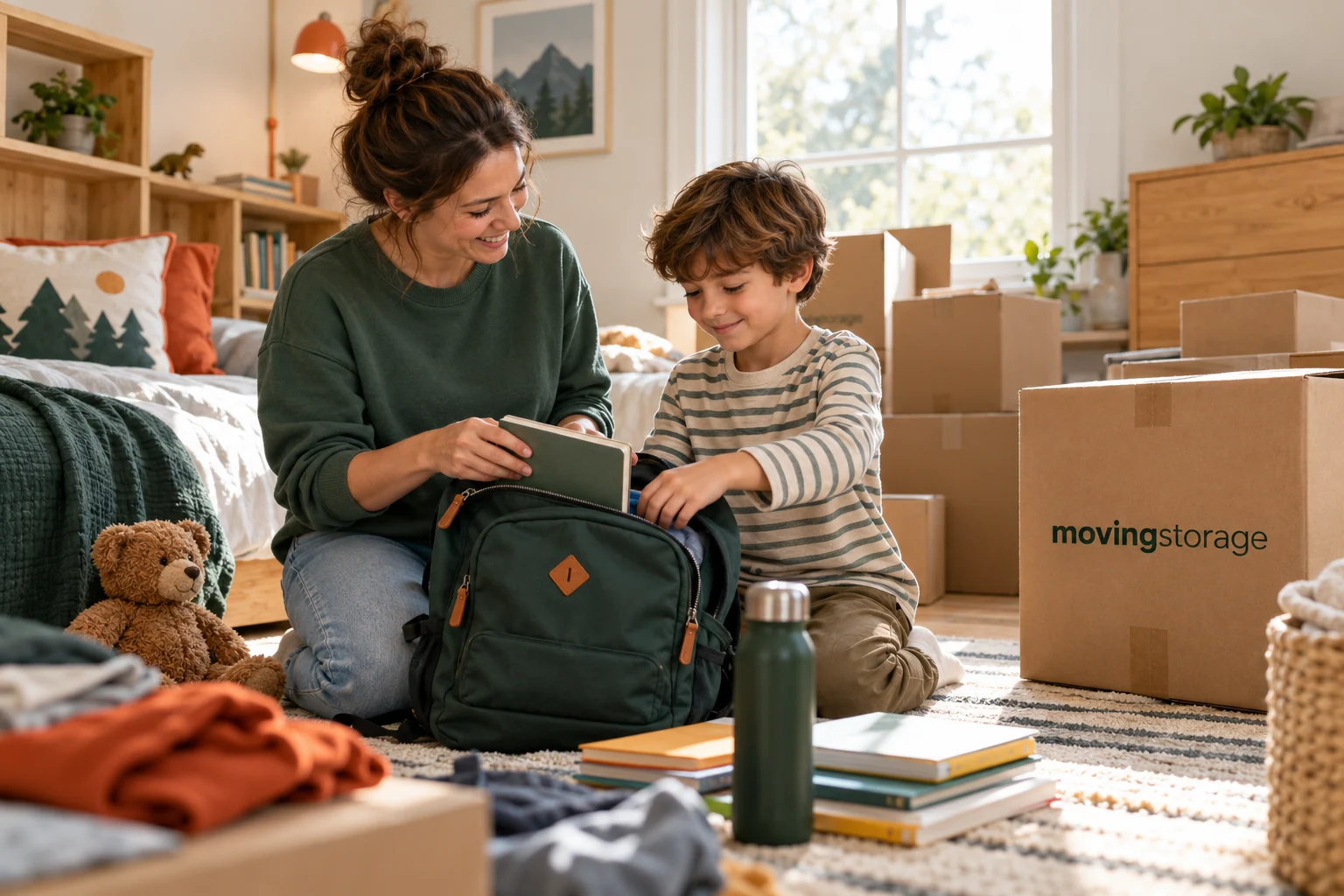
When you move with children, plan the ordinary parts of their day alongside the large bookings. Meals, sleep, school, care, and familiar belongings still need a place while rooms are being packed and adults are answering questions. Start by deciding who will handle those needs at each stage. A detailed truck schedule does not answer where a child will eat lunch or which adult will be available during loading.
Children differ in age, understanding, interests, and care needs, so use the plan that fits your family. This guide focuses on household organization and communication rather than diagnosing reactions to a move. If you have concerns about a child's health or wellbeing, contact an appropriate qualified professional. You can make the logistics clearer without expecting a checklist to settle every feeling about leaving a familiar home.
Explain the facts you actually know
Tell children what is changing in language they can understand. Include where the family is going, who is moving, and what the next few stages will look like. If the destination or timing remains uncertain, say which part is not decided. Avoid filling the gap with a promise that may change. A simple accurate explanation is easier to update than an elaborate story designed to remove every question at once.
Give children room to ask the same question again. They may be trying to understand the sequence rather than ignoring an earlier answer. Use the same basic terms for packing, travel, and arrival so different adults do not describe conflicting plans. If a child asks something you cannot answer, note it and find the information where possible. Do not assume that an adult concern is also the child's main concern.
Show practical information when it is available. A room plan, a photograph, or a visit can help explain the destination without presenting it as a guarantee of how everything will feel. Identify familiar activities that will continue, while being honest about those that will change. Keep discussions about complex adult arrangements separate from the details the child needs to follow an ordinary day.
Put routines on the moving calendar
List the parts of daily life you most need to preserve: getting dressed, meals, medication or care arrangements, school, rest, and bedtime. Assign the necessary belongings and an adult to each part during packing, travel, and arrival. The CDC's guidance for parents of toddlers and preschoolers supports simple, predictable routines and explaining changes calmly. Apply that principle in a way that matches your child's age and existing needs.
Expect some practical changes and explain them before they happen when possible. If breakfast will be eaten from a travel bag because the kitchen is packed, show where the food and utensils will be. If a different adult handles the usual evening routine, tell the child who that person is and what will stay familiar. Avoid promising a normal schedule when the household cannot realistically maintain it.
Protect a few usable spaces while packing. Keep a bed, a place to eat, and access to the bathroom functioning for as long as the plan allows. If professional packing will change that, prepare the alternatives beforehand. An adult may tolerate searching several boxes for a cup, but repeated searches for everyday items can make caring for a child harder at exactly the time attention is already divided.
Offer choices that are real and manageable
Choose decisions a child can genuinely make within the household plan. These might include which books travel in the personal bag, how to mark a bedroom carton, or which familiar item is unpacked first. Keep the options clear and limited enough for the child to use. Do not offer control over the moving date or destination if those decisions have already been made and cannot be changed by the answer.
Explain what will happen to belongings that are packed. A child may not understand whether a closed carton is travelling with the family, being donated, or going into storage. Use distinct labels and show the difference. Avoid quietly disposing of another person's possessions simply to speed packing. Where sorting is appropriate, allow time for discussion and keep decisions consistent with the child's age and the family's usual arrangements.
Let involvement remain optional within reasonable boundaries. Some children enjoy helping label or sort; others may prefer to continue an ordinary activity while an adult packs. A moving plan should not depend on a child completing necessary work on a fixed schedule. Give safe, suitable tasks where helpful, then make sure the adult packing plan can still finish if the child loses interest or needs attention.
Keep treasured belongings out of the main load
Identify the items a child uses daily or relies on for familiar routines. These might include a particular blanket, book, toy, comfort item, or activity supplies. Put them in a clearly identified bag that remains with the responsible adult. Check that the items fit the actual travel arrangements rather than assuming a large personal box can accompany every mode of transport.
Discuss what can travel close by and what must go with the furniture. If a favorite item is too large, explain where it will be packed and when it should become available. Record its carton number or place on the inventory. Avoid promising immediate access if delivery timing is uncertain. A clear account of the item's journey can be more useful than telling a child not to worry without explaining what will happen.
Prepare the rest of the arrival supplies before packing the children's room completely. The first-night box guide can help you separate bedding, washing supplies, clothing, and basic food needs from the main shipment. Label the bag plainly and keep it away from loading stacks. An essentials bag that is accidentally loaded becomes another sealed container rather than a practical arrival plan.
Arrange supervision before moving day
Decide where children will be during loading and unloading and which adult is responsible. A trusted caregiver or an appropriate arrangement away from the busiest areas may help, depending on the family. Confirm the times and transport rather than relying on a casual offer. If the move takes longer than expected, the caregiver should know whom to contact and what extension is possible.
If children remain at the home, identify a suitable area and maintain active supervision. Open doors, furniture handling, tools, and packaging create a busy environment that needs adult attention. A sign on a room does not replace supervision, and the moving crew should not be expected to watch a child while working. Explain the arrangement to the adults involved and give responsibility to a named person.
Avoid assigning every loading decision to the same adult who must provide continuous care. If no additional help is available, simplify the move plan and discuss what is practical with the provider. Prepare snacks, ordinary activities, and the care supplies you need in advance. The important question is not whether the child can be kept occupied indefinitely, but whether an adult remains available when the child's needs change.
Plan travel as a family day
Work out the journey with meals, stops, rest, transport, and the children's ordinary care needs in mind. Keep supplies accessible instead of placing them below other luggage. If you use a carrier or accommodation provider, confirm relevant conditions directly. Do not assume that a booking described generally as suitable for families includes the exact space, equipment, or arrival arrangement you need.
Explain the travel sequence at a useful level of detail. A young child may need to know what happens next, while an older child may want to see the route or understand when they can contact friends. Keep the explanation flexible enough for ordinary changes. Do not tie reassurance to a precise arrival time that the household cannot guarantee through traffic, delayed departure, or other travel conditions.
Keep documents, prescribed care information, and necessary supplies with the responsible adult. Follow professional advice for individual medical or care needs instead of using a moving article as a treatment plan. If adults travel separately, make the handoff of records and belongings explicit. A child's bag and the person who needs to use it should remain part of the same practical arrangement throughout the journey.
Make room for goodbyes and continuing contact
Leave some time for the people, places, and routines the family is leaving. This could be a visit, a photograph, or exchanging contact information through an arrangement appropriate for the child's age. Do not treat a goodbye as a task that must produce a particular emotional response. The purpose is to give the child an opportunity to mark the change, not to make them perform enthusiasm about the destination.
Discuss realistic ways to stay in contact with friends or relatives. Avoid promising frequent visits before considering distance, schedules, and cost. A manageable plan that adults can follow is more useful than an ambitious promise forgotten once unpacking begins. For younger children, adults may need to arrange the communication; older children may need guidance about the family's existing privacy and online-contact rules.
Keep familiar activities available where practical during the transition. A book, game, hobby supply, or short conversation can continue even while the home looks different. You do not need to recreate every part of the old routine at once. Choose a few ordinary activities the family actually uses, then make sure the necessary items do not disappear into storage or a carton marked only miscellaneous.
Prepare school and care transitions through official contacts
Contact the relevant school, district, nursery, or care provider directly about enrollment, records, start dates, and access arrangements. Requirements depend on the destination and the child's circumstances. Use current instructions from the responsible organization rather than assuming a previous enrollment process applies. Keep copies of submitted records and note which steps are confirmed and which still require a response.
Share practical information with the people who need it, using the appropriate channel. This may include collection permissions, emergency contacts, care instructions, or a start-date change. Avoid placing sensitive records in a broadly shared moving folder. The moving provider needs access details and shipment information; it does not need a child's educational or health records to transport household furniture.
Plan the first school or care journey before the morning it is needed. Check the route, transport, collection arrangements, and what must be ready the night before. Set aside the clothing and materials required so they do not depend on finding an unmarked carton. If the start date overlaps a delivery window, arrange which adult will handle each responsibility rather than expecting one person to manage both locations.
Set up the new home for ordinary use
Prepare the child's sleeping and everyday care arrangements early in the unpacking sequence. Check the new environment for the child's age and needs before treating an unfamiliar room as ready for unsupervised use. Keep tools, packaging, cleaning products, and unstable stacks out of the areas the child will use. Ask an appropriate professional when you need advice about specific equipment or safety arrangements.
Use the same room labels on cartons that the household uses in conversation. If two bedrooms are similar, mark them clearly so the belongings do not scatter between rooms. Put the child's travel bag in a dependable place and keep a few familiar items available before decorating or arranging every shelf. A room can support sleep and daily routines without looking completely finished on the first evening.
Our first-week plan for a new home helps you choose practical priorities. Keep meals, rest, care, and the next day's commitments visible before adding optional projects. A child may need an adult's attention when the adult hoped to unpack another room. Leave space for that in the plan rather than treating every interruption as a failure to keep pace with a fixed unpacking target.
Review the plan after the first few days
Ask children about concrete parts of the new routine: where they put their bag, how the morning journey works, or which belongings they cannot find. Those questions can reveal a practical problem you can solve without asking them to summarize every feeling about the move. Keep explanations honest and acknowledge when an arrangement is still temporary. Let the household adjust the details as it learns how the new home actually works.
Keep important contacts and care information accessible after the moving folder is put away. Confirm that outstanding enrollment or record-transfer tasks have been completed. If you have concerns that call for professional support, contact an appropriate qualified provider rather than waiting for an arbitrary period because a general guide suggested adjustment should be complete. The child's needs and circumstances matter more than a universal settling-in timetable.
Close the moving tasks in stages and restore ordinary household responsibilities gradually. You can thank children for useful help without making them responsible for how smoothly the move went. The adults remain responsible for the logistics and care plan. A workable move with children is built from clear information, assigned supervision, reachable essentials, and routines that can continue while the address and surroundings change around them.