
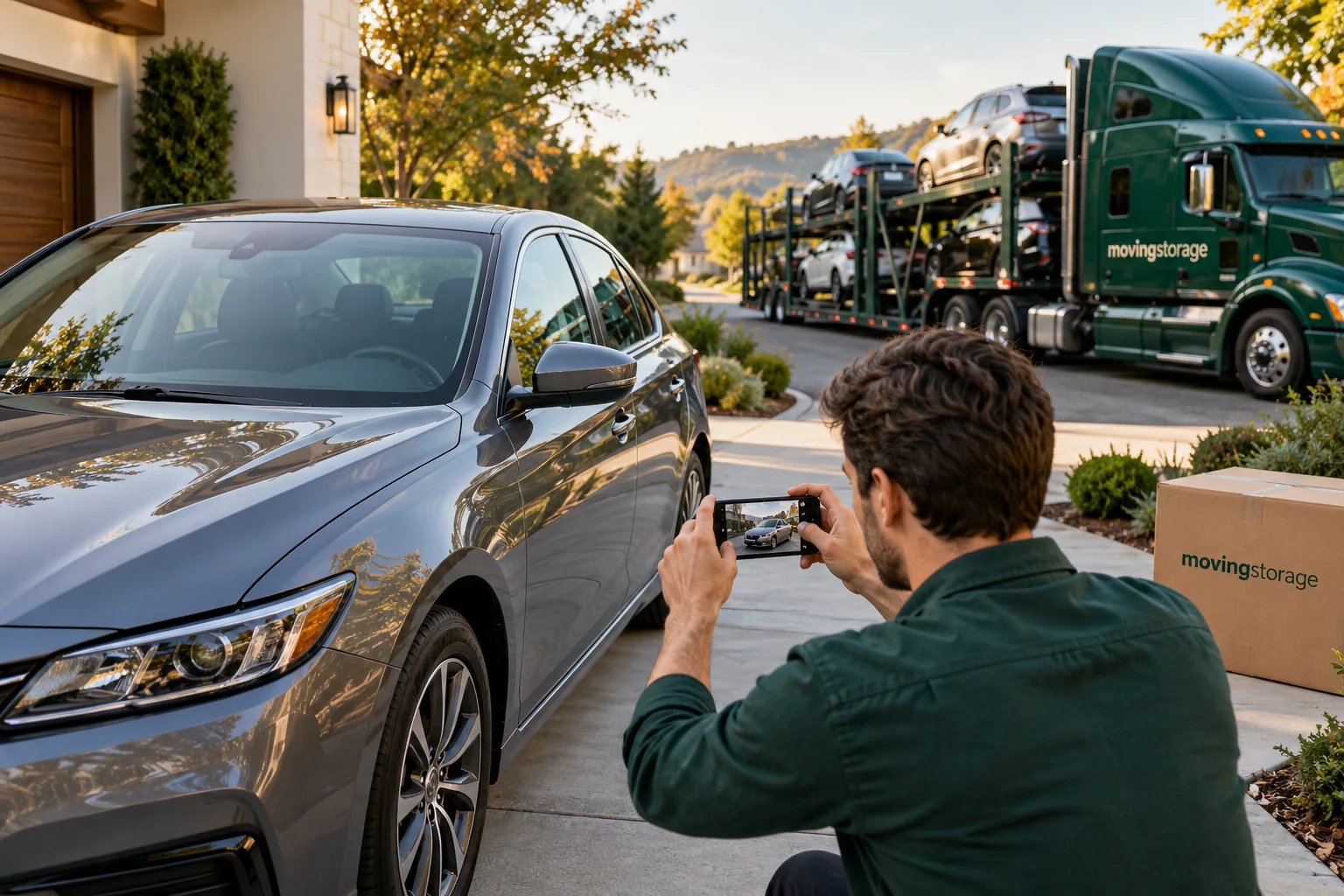
Prepare a car for transport by confirming the service, documenting its condition, and following the carrier's instructions for the actual vehicle. Do this before the pickup window. The transport company needs accurate information about the car and access, while you need a clear record of who is taking it, what service you bought, and how it will be received.
Keep the car plan separate from the household shipment even if you arrange them at the same time. The vehicle may have a different carrier, schedule, contract, and reporting process. Put the two timelines beside each other so you can manage the period when the car is unavailable without assuming it travels with your furniture.
Identify the business arranging the journey
Ask whether you are dealing with the carrier that will transport the vehicle or a broker arranging transport. Record the legal business name, verified contact details, booking reference, and the party responsible for each stage. If another carrier will perform the collection, ask how you will receive and verify its identity before pickup.
The FMCSA consumer advisory on automobile transporters explains the distinction between carriers and brokers and directs consumers to check interstate registration. Use the agency's current resources for the service you are considering. Do not rely on a familiar logo or an unsolicited message as proof of who is collecting the vehicle.
Read the service terms before accepting the booking. Ask which company handles dispatch updates, payment questions, condition reports, and any complaint or claim. Keep those answers with the agreement so you are not trying to work out the relationship between businesses while the driver is waiting for the keys.
Describe the car accurately
Provide the make, model, year, and any other details the carrier requests. Tell them about modifications, unusual dimensions, low clearance, roof equipment, or a condition that affects moving the car on and off the transporter. Do not select the nearest ordinary vehicle category if it leaves out a detail relevant to loading.
Explain whether the car starts, moves, steers, and brakes as expected, and report a change before collection. A carrier may need a different arrangement for an inoperable vehicle. Ask how the condition affects the service and price in writing. Avoid assuming that any problem can be managed by the driver with the equipment already on the truck.
Give the carrier the information it needs about accessories and alterations without trying to diagnose what loading method will work. If a specialist assessment is needed, arrange it before the pickup date. A photograph can help explain a feature, but it does not replace the carrier's decision about safe and suitable handling.
Clarify the service and timing
Ask what pickup and delivery windows mean under the agreement. Check how updates will be sent, whom you should contact, and what happens if timing changes. Do not make an inflexible travel plan around an estimated arrival without understanding the uncertainty in the service.
Confirm the pickup and delivery locations and any conditions attached to them. A door-to-door description may still require an approved meeting point when the transport vehicle cannot reach the property. Ask how such a location is chosen and agreed. Do not accept a last-minute meeting point that you cannot assess or reach appropriately.
Read the cancellation, rescheduling, payment, and release terms. Ask whether different conditions apply before a carrier is assigned and after dispatch. Keep the version you accept and any written update. If you need a fixed date, discuss that requirement explicitly rather than assuming that a preferred date is guaranteed.
Get the carrier's preparation list
Ask for current written instructions covering fuel, keys, alarms, personal items, loose accessories, and the car's operating condition. Follow the instructions for the booked service. There is no single preparation amount or method that should be applied blindly to every carrier, vehicle, and route.
Ask about any special requirements for an electric, hybrid, modified, historic, or unusual vehicle. Use the manufacturer's information when the carrier asks about an operating procedure. Do not change a battery, electrical system, or mechanical setting based on a general moving article. Obtain appropriate advice when the instructions require technical work.
Confirm what must be available at pickup. The carrier may request specific documents, authorization, and keys. Find out which originals you should retain and what the receiving person needs. Avoid handing over an entire personal document folder when only a particular piece of information is required.
Remove belongings according to the agreement
Check the car's cabin, boot, glove compartment, door pockets, seat pockets, and storage areas. Remove personal belongings as the carrier requires. Do not treat the transported car as spare household shipping space unless the written agreement expressly permits the proposed contents and explains the relevant conditions.
Take out identity documents, medication, valuables, access devices, and anything you need while the car is away. Check for items that have been left in the car out of habit, such as work passes, parking cards, chargers, or a child's everyday supplies. Assign them to the bags travelling with you before packing the household load.
The moving essentials bag guide helps you plan what stays available during the gap. Include the transport booking details there as well. If the household and car have different delivery windows, your personal carry plan should work through the longer period without relying on either shipment.
Prepare loose equipment and accessories
Ask the carrier how to handle removable accessories, roof equipment, aerials, racks, covers, and other external parts. Tell them what is fitted rather than silently removing or altering it. Follow the approved preparation method and keep any removed parts labelled for the car.
Check whether a specialist needs to prepare an aftermarket component or unusual feature. Do not disconnect safety equipment or change the car's operating systems to make transport easier. Give the driver clear manufacturer instructions for any ordinary control it may need to use, while allowing the carrier to decide the handling method.
Keep an inventory of accessories that remain with the vehicle under the agreement. Record their condition and location where useful. This can include the items the carrier has specifically agreed should accompany the car. Do not rely on a loose verbal promise that an unlisted bag or component will be accepted when the driver arrives.
Create a useful condition record
Clean the car enough to make its exterior condition visible, following its care guidance and allowing it to dry. Choose a well-lit place and take clear photographs of all sides. Include wider views that identify the car and closer views of marks you want to document. Avoid filters or edits that make condition harder to judge.
Record existing chips, scratches, dents, damaged trim, or other visible concerns with a plain description. Identify the location rather than guessing how an old mark occurred. Include relevant interior or accessory views where they are part of the agreed handover record. Keep the original files with the booking details.
Ask how the carrier conducts the pickup inspection and what condition document you will receive. Compare that document with what you observe, raise a discrepancy before signing, and retain a copy. Your photographs support a factual record but do not replace the carrier's required inspection or reporting process.
Confirm a suitable pickup point
Give the carrier accurate information about the approach, road, gate, and available loading area. Tell them about restrictions, narrow turns, low features, slopes, or shared access. Let the carrier assess the transport vehicle's needs. A place where you park your car every day may not suit a large vehicle transporter.
Ask the responsible authority or property manager about permission where necessary. The guide to moving-day parking and loading access provides a way to organize those questions. Confirm the actual rules for the location rather than assuming that a nearby open space permits loading.
If an alternative meeting point is required, agree it through the verified carrier contact. Check how you will get there, how you will leave after handover, and whether the location is authorized and appropriate for the work. Keep a plan for contacting the driver without sharing unnecessary personal access information.
Arrange the keys and operating information
Ask exactly which keys or access devices the carrier requires and how they will be recorded. Remove unrelated household or work keys from the ring. Keep a suitable spare under your control where available. Do not conceal an unrecorded key in the car or leave it in an unlocked location based on an informal message.
Explain any ordinary operating feature the driver needs to know, such as a manufacturer-approved starting procedure or an alarm instruction. Provide concise written information where the carrier requests it. Tell the carrier if a key, remote, or control is unreliable before pickup, since that can affect the work.
Check the handover authorization if someone else will attend. They need the current booking details, relevant condition record, and permission the carrier requires. Make clear what decisions they can make and how they can reach you. A representative should not be left to accept a changed service without understanding the instruction.
Use pickup as a controlled handover
Verify the arriving carrier through the details confirmed for your booking. Review the condition record with the driver and check the vehicle and destination details on the paperwork. Ask questions before signing if an entry is missing, inaccurate, or unclear. Keep your copy available through delivery.
Record the time, the person receiving the car, and the documents or keys handed over through the carrier's process. Confirm how you will receive progress updates and what contact method to use if a material detail changes. Avoid relying on a driver's personal number as the only route to the business responsible for the service.
If the car's condition has changed since booking, tell the carrier before loading begins. A new mechanical problem or modification may affect the accepted plan. Ask the company to resolve the change and document the revised arrangement rather than asking the driver to manage it informally.
Prepare the receiving person
Choose someone who can attend within the agreed delivery arrangement and has the authorization the carrier requires. Give them the booking, current contact details, and pickup condition record. They should know what to check and how to report a concern, rather than receiving only a message that a car is coming.
Confirm the destination access and any meeting point with the carrier before delivery. Plan transport for the receiving person if the car is delivered away from the new home. Check that keys, documents, and any agreed accessories are accounted for as part of the handover.
Inspect the vehicle with the driver in the way the service requires. Compare the visible condition with the pickup record and document concerns promptly. Do not guess at a cause or attempt a repair before you understand the applicable reporting process. Keep the condition documents and supporting images together.
Close the transport record after delivery
Review the final payment and receipt against the agreement. If a charge is unfamiliar, ask the responsible business for a written explanation. Keep the booking, preparation instructions, condition reports, photographs, receipts, and relevant messages until any outstanding question has been resolved.
Follow the carrier's and any coverage provider's current process if further action is needed. Check the actual deadlines and documentation requirements rather than using a general online summary. Seek qualified advice when you cannot understand the terms or resolve a dispute through the stated route.
The preparation is complete when the car is accurately described, the carrier and service are understood, the condition is recorded, the access is agreed, and a prepared person can attend each handover. Those steps give you a practical record for the journey without inventing a universal fuel level, loading rule, or delivery promise that may not apply to your booking.
Plan the days when the car is unavailable
List the journeys normally made in the car between pickup and delivery. Work, school, care appointments, shopping, and collecting keys may still need transport during that period. Make a separate arrangement that fits the expected window and has a reasonable response to a timing change. Do not assume that a household delivery update also tells you when the car will arrive.
If a friend or representative receives the car, agree how it will reach you afterward. Check who can accept the handover under the carrier's process and who is appropriately authorized to drive it. Keep keys and the condition record with the agreed receiving person. Avoid leaving the final step as an informal promise to sort it out once the truck arrives.
For a household moving more than one vehicle, keep an individual record for each car. Use clear identifiers in photographs and documents so a condition note cannot be attached to the wrong vehicle. Track separate pickup or delivery arrangements if they differ. A combined booking can still involve different handovers, and the paperwork should make the status of each vehicle easy to understand.
Once all vehicles are received, check which transport records remain open and which can be filed. Keep any unresolved payment or condition matter separate from the ordinary household unpacking list. This gives you a clear next action and contact route without letting a vehicle question disappear among furniture receipts and other moving paperwork.