
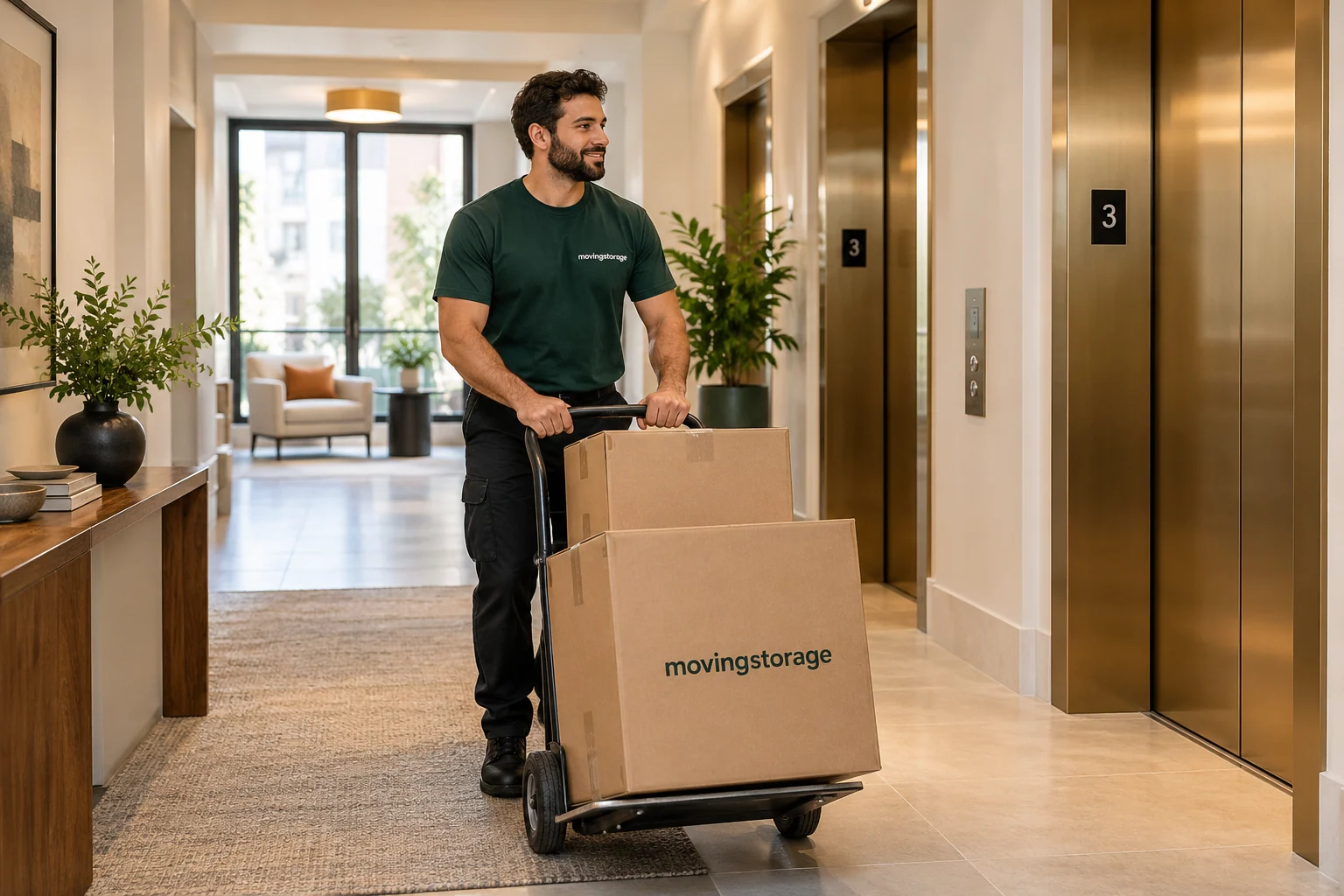
An apartment move is shaped by the route between your rooms and the vehicle. That route may cross shared corridors, a lift, a loading entrance, stairs, and a pavement before a box reaches the truck. Plan the whole route at both addresses. A provider cannot assess the work accurately from the apartment's floor number alone, and a building manager cannot reserve the right access without understanding what you intend to move.
Start with the building's written moving instructions where they exist. Ask questions about anything unclear and keep the answers with your moving documents. Avoid relying only on a neighbor's experience, because the entrance, available hours, or booking process may have changed. Your goal is a confirmed arrangement that the household, building staff, and moving provider can all follow on the day.
Ask about the actual moving operation
Tell building management your likely date, unit, load size, and whether you are moving in or out. Ask which entrance should be used, what hours are permitted, and whether a reservation is required. Check if the building needs notice, documents, or attendance by a particular person. Get the current process directly rather than assuming that ordinary delivery instructions also cover a household move.
Ask whether any shared spaces will be unavailable during the proposed period. A planned maintenance visit, another resident's move, or work near the entrance can affect the usable route. If there is a conflict, discuss alternatives before booking a vehicle around the original slot. Record whether an alternative is merely possible or has actually been approved. A vague answer that the date should be fine leaves too much unresolved.
Repeat the conversation at the destination. Do not treat the new building as a problem you can solve when you arrive with the load. Ask who can let you in, when keys become available, and whether the apartment itself will be ready. If a representative will receive the move, make sure that person has the instructions and any necessary authorization. Keep their contact details available to the provider as well as to you.
Reserve the right lift and understand its limits
Confirm which lift may be used for furniture and whether it must be booked. Ask about the reserved period, dimensions, door opening, and any building requirements for protective padding. Do not assume the largest lift is automatically available. Some buildings use different arrangements for residents, goods, and service staff. The useful answer is which lift the move can actually use at the agreed time.
Measure large furniture along the whole access route, including the lift cabin. A cabinet may fit inside yet fail to turn through the lobby door. Check the approach, door swing, corners, and clearance above the item. Share measurements or clear photographs with the provider and ask for its assessment. Avoid experimenting with a heavy object on the day if a measurement now can reveal that another plan is needed.
Ask what happens if the lift is unavailable or the move runs beyond the slot. The building and provider may need separate discussions. Confirm how delays should be reported and who can approve a revised arrangement. Do not assume that an unused slot later in the day can be taken without notice. Keep the relevant phone numbers together so you are not searching for a building office while the vehicle waits outside.
Describe stairs with enough detail to be useful
If stairs are part of the route, count the flights and note tight turns, low ceilings, narrow treads, and changes in width. A short straight flight is different from a winding staircase with a small landing. Include the distance from the apartment door to the stairs and from the bottom of the stairs to the loading point. This gives the provider a clearer picture of the work than a floor number by itself.
Identify furniture that may need disassembly before it reaches the stairwell. Check whether the item was assembled inside the apartment and whether you still have the instructions and tools. Do not assume a piece will leave in one section because it is already in the room. If you cannot establish how it entered, ask the provider to assess the route before the move and agree on the preparation needed.
Keep stairways usable while packing. Do not leave cartons, loose bags, or detached furniture parts on shared steps or landings. Apart from making the move harder, a blocked route affects other residents. Plan a staging area within your own home or another space explicitly agreed with the building. The loading sequence should work without treating the shared stairwell as an extra storage room.
Connect the vehicle plan with the entrance
Ask building staff where a moving vehicle may load and whether a bay must be reserved. Check the distance to the entrance, any height or size restrictions, and how a driver gains access. If the area is on a public road, find the relevant local parking or permit process rather than treating the building's preference as permission to occupy the road. Rules depend on the location, so verify them with the responsible authority.
Give the provider the proposed loading arrangement and ask whether it suits the planned vehicle. A space that fits a car may not fit the truck, and a covered entrance may have a height limit. Include photographs showing the approach and the available maneuvering space. Do not use a wide-angle photograph as a substitute for measurements when the clearance is close or difficult to judge.
The parking and loading access guide can help you collect the details. Once a plan is agreed, keep it connected to the estimate and arrival instructions. If a road closure, building change, or new restriction appears before moving day, tell the provider promptly. Access information becomes useful only when it reaches the person planning the actual vehicle and work sequence.
Prepare the apartment without taking over the corridor
Choose a packing area that keeps your entrance clear. Stack finished cartons securely inside the home and group them by destination or loading priority. Leave enough room to access furniture that needs wrapping or disassembly. A densely packed hallway can prevent the crew from reaching a large item, turning a simple preparation task into repeated handling of every box around it.
Keep items that will not be loaded in a separate room or clearly designated area. This includes travel bags, medication, documents, cleaning equipment, and anything that stays with the apartment. Explain the arrangement during the walkthrough rather than expecting every person entering to interpret a handwritten note in the same way. Physical separation and a short conversation work better together than either one alone.
Protect finishes using materials and methods accepted by the building and provider. Ask before applying tape, hanging padding, or covering surfaces where it may create a problem. Keep protective materials from interfering with doors or creating loose edges underfoot. You do not need to improvise a complete protective system if the provider has an agreed method, but you do need to know who is responsible for installing and removing it.
Coordinate the people who will be present
Decide who will remain at the origin while loading finishes. That person needs access to the inventory, written instructions, and any building contacts. Avoid giving the role to someone who must leave halfway through the reserved slot. If another adult will wait at the destination, agree on what information they need and how you will communicate if the arrival time changes.
Plan separately for children and pets. A busy shared entrance and open apartment door can be difficult to manage while answering questions about the load. Arrange a suitable quiet space or another responsible person where possible. Do not assume the provider will supervise household members while handling furniture. Their work and your household responsibilities should both have clear owners.
Tell helpers exactly what role they have. A friend directing traffic, a relative carrying bags, and a provider's crew can accidentally work against each other if nobody has explained the sequence. Keep access directions consistent and avoid sending different people to give conflicting instructions. One household contact for loading questions usually makes the operation easier to follow, even when several people are helping with other tasks.
Plan the final hours in the old apartment
Check how cleaning and handover fit around the loading period. You may need water, electricity, basic tools, and access after most possessions have left. Keep those items outside the main load until their work is complete. If you must leave immediately after loading, arrange the cleaning and key return accordingly rather than discovering that the supplies are already inside the departing vehicle.
Read the property handover instructions and identify the tasks you are responsible for. Confirm where keys, fobs, parking devices, and access cards go. Keep a simple count so a small device is not left in a packed drawer or taken to the new building by mistake. Photograph relevant final conditions if useful and retain confirmations of the return process with the move documents.
Walk through every storage space assigned to the apartment, including lockers, garages, balconies, and any separate unit elsewhere in the building. These areas are easy to miss when attention is focused on the living rooms. Check behind open doors and inside built-in cupboards before the vehicle leaves. A completed room is not proof that a separate storage locker has been emptied.
Make the destination ready to receive the load
Label rooms or doors in a way the people carrying boxes can understand. Apartment layouts are not always obvious from the entrance, especially when several bedrooms look alike. Match the names to your carton labels. A box marked rear bedroom is less useful if nobody knows which direction was used to name the room. Agree on simple room names before loading and keep them consistent at delivery.
Decide where large pieces should go before they block the route. Measure the intended position and leave space for doors, radiators, outlets, and normal walking paths. Avoid asking the crew to move the same heavy item repeatedly while you decide between layouts. The furniture fit guide explains the measurements that help you make these decisions before the item reaches the building.
Keep unpacking out of the main unloading route. Opening several cartons in the entrance can scatter packaging just as the next load arrives. Set essentials in a designated place, then let the larger delivery sequence finish. Check the inventory as items arrive and record concerns through the provider's written process. You can begin setting up the home without turning every available surface into an unpacking station at once.
Leave shared areas as the building expects
After loading or delivery, inspect the agreed route and remove your packaging, temporary signs, and other materials through the proper disposal arrangement. Ask where cartons may be placed for collection rather than filling a shared bin area without permission. Large volumes of packing material can require a different arrangement from ordinary household waste. Keep reusable supplies separate if you intend to pass them on.
Report any access issue or damage factually to the relevant parties. Record what you observed, where it is, and when you noticed it, without guessing about responsibility before the facts are clear. Keep related photographs and messages together. A prompt, specific report is easier to investigate than a broad complaint sent after the building and provider have both moved on to other work.
Finally, close the bookings you opened. Confirm that any lift, bay, key, or access device has been returned to the agreed arrangement. Keep the building instructions until handover and any follow-up matters are complete. An apartment move is finished when the household can use the new space and the shared parts of both buildings have been dealt with properly, not simply when the last carton crosses your threshold.
Share one short access sheet
Condense the confirmed arrangements onto a page that can be read on a phone. Include the correct entrance, loading point, contact number, lift reservation, permitted hours, and any item that needs special preparation. Avoid sending a driver a long history of messages and expecting the current instructions to be obvious. Use the full address and unit number, then distinguish the vehicle entrance from the pedestrian entrance if they are different.
Review that sheet when the schedule is confirmed and again shortly before the move. If an instruction changes, replace the shared version and tell the people who received the old one. A crossed-out note on your private printout does not update the provider's copy. Keep personal door codes and other sensitive access details limited to the people who need them, using the method approved by the building rather than publishing them in a broadly shared household document.