
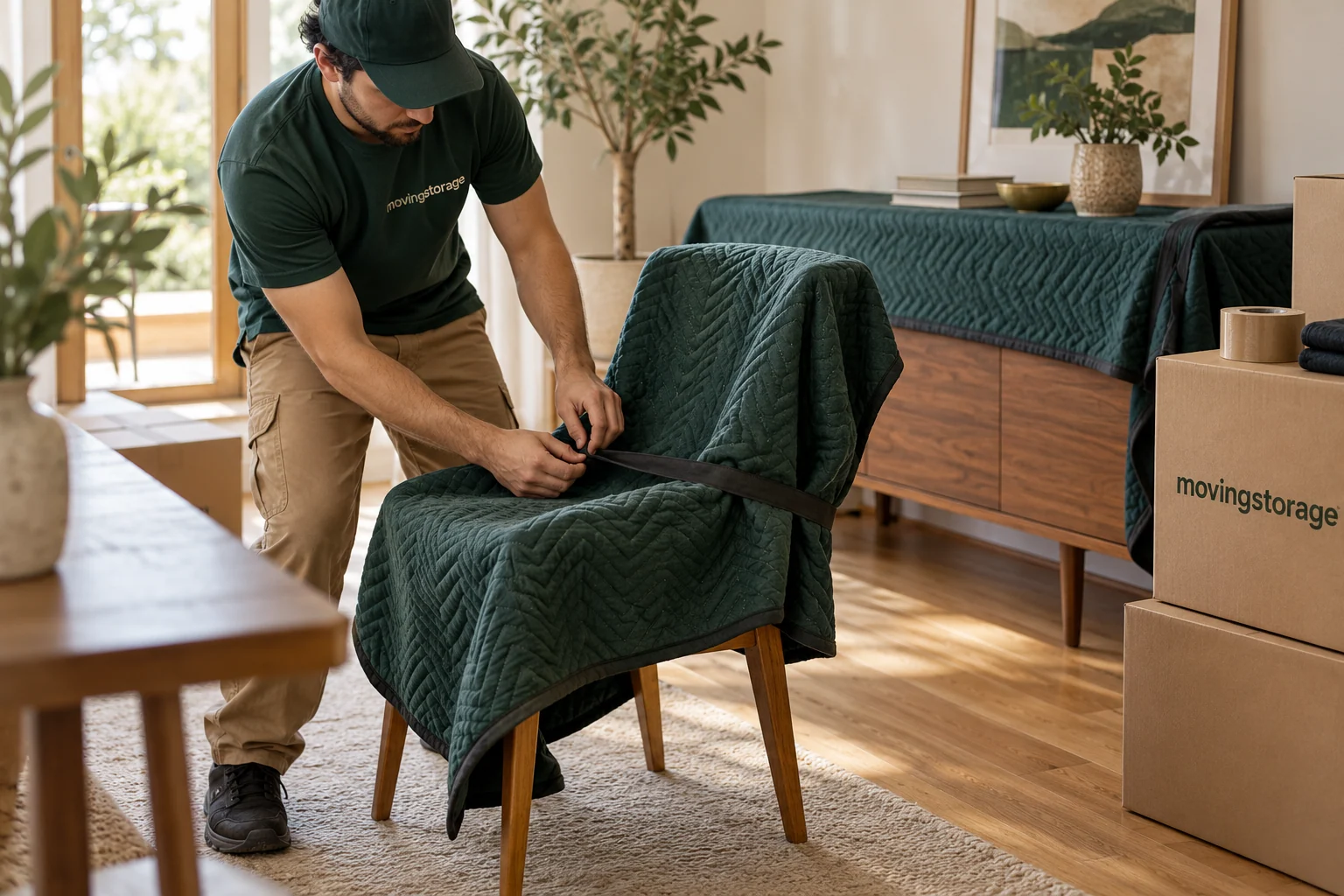
Prepare furniture for storage by checking the condition and construction of each piece before choosing covers or taking anything apart. A sofa, a flat-pack bookcase, and an old cabinet can require different handling. Start with the item's care information and the environment it will enter, then make a preparation plan that the people moving it can follow.
Storage preparation is separate from deciding whether a piece should be stored at all. Check whether it fits the next property, whether you expect to use it again, and whether the rental and handling arrangements make sense for your circumstances. Settling those questions early avoids spending time protecting furniture that remains in storage only because no decision was made before moving day.
Build a piece-by-piece list
Write down each item, its main materials, and any known condition issues. Include drawers, loose shelves, glass panels, cushions, removable feet, and other components that may travel separately. Furniture often becomes difficult to track when one named piece turns into several wrapped parts. Give the parts a common reference so they can be reunited without relying on someone's memory.
Measure the piece as it stands and note whether its dimensions may change after approved disassembly. Check the route out of the home and into the unit. A storage plan that accounts for the floor space but ignores the doorway can fail before the item reaches its assigned position. Share the measurements with the provider or handlers while there is still time to discuss alternatives.
Record your intended next use. A dining table needed soon should be prepared and positioned differently from a cabinet that will remain untouched until a renovation ends. If you expect to retrieve only part of a modular set, identify that part clearly. The preparation list should connect protection, access, and reassembly to the way you will actually use the furniture.
Inspect before covering anything
Look at joints, feet, handles, hinges, and any area that appears loose or damaged. Do not assume a cover will make an unstable piece safe to carry. The North Carolina Museum of History's furniture-care guidance emphasizes inspecting furniture before handling. If the piece is unstable, arrange appropriate help before moving it rather than asking helpers to discover the weakness while lifting.
Photograph existing marks and damage with enough context to identify the location on the piece. A close image of a scratch is more useful when accompanied by a view of the whole side or panel. Keep the date and item reference with the photographs. Avoid describing the images as a guarantee about condition; they are a record of what you could see at that time.
Check underneath and behind the furniture where practical and safe. Dust, loose fixings, forgotten belongings, or visible signs of moisture can be missed on the surfaces you normally see. Stop if the inspection suggests a problem beyond ordinary preparation. Existing mold, pest activity, or structural damage calls for appropriate advice, not immediate wrapping and transfer to a shared storage building.
Clean according to the materials
Use the maker's instructions or advice appropriate to the finish and material. A cleaning method suitable for one modern surface may damage another finish, fabric, or adhesive. Avoid applying a new treatment simply because the furniture is going into storage. If you cannot identify a sensitive surface or are caring for an antique, seek qualified guidance before experimenting.
Remove ordinary loose debris from accessible areas without forcing tools into delicate joints or upholstery. Pay attention to the places where crumbs and small objects collect, such as beneath removable cushions or inside drawers. Take care with fasteners and detachable trim. Cleaning should prepare the piece for storage without creating new loose components or concealing an existing defect.
Allow cleaned surfaces and components to dry fully before enclosing them. Check hidden contact areas where moisture may remain after the visible surface seems dry. Do not schedule cleaning so late that the item must be wrapped before you can assess it. If an appropriate drying period does not fit the moving timetable, discuss another preparation method or reschedule the work.
Decide what can safely come apart
Find the assembly or disassembly instructions before removing fittings. Note where the manufacturer permits separation and which parts support the structure. Do not assume every piece is designed to be dismantled repeatedly. Some joints, finishes, and inexpensive fixings can be damaged by unnecessary removal, so use the actual construction and guidance to decide what work is justified.
If someone else will disassemble the furniture, confirm who does the work, what tools they bring, and whether reassembly is also included. Put those details in the agreed service scope. A general statement that movers can handle furniture may leave uncertainty about complex beds, wall-mounted items, or proprietary fittings. Clarify the piece and task rather than relying on a broad description.
Take sequential photographs where they will help reassembly, but keep them tied to written notes about the parts. An image can show orientation without explaining which of several similar bolts belongs in a particular hole. If instructions are missing and the construction is unclear, stop and obtain appropriate help. Improvised disassembly can leave both the furniture and the people handling it at risk.
Keep hardware with a clear identity
Use a suitable closed container for each piece's fittings and label it before the parts are mixed with anything else. Include the furniture identifier and a brief description of the contents. Keep sharp or heavy components contained so they cannot damage a surface through the bag or box. Do not rely on a thin, loose bag to protect everything around it.
Decide whether the hardware container will travel with the piece or with a separately controlled reassembly kit. Either method needs a clear record. Attaching a container is useful only when the attachment is safe for the furniture and cannot fall off during handling. Avoid adhesive directly on a sensitive finish unless the relevant instructions specifically permit it.
Count small parts against the instructions where possible before the furniture enters storage. A missing fitting is easier to resolve while the original room is still accessible and the dismantling process is fresh. Note any part that needs replacement and arrange it deliberately. Do not label the job complete just because the larger panels have been wrapped.
Protect surfaces without forcing pressure
Choose compatible materials for the surface and expected storage duration. Ask your provider which covers are intended for transport and which are suitable to remain in place. Padding that prevents rubbing during a journey may need to be reviewed for a longer stay. Give particular attention to edges, delicate projections, handles, and surfaces that could contact another item.
Do not press wrapping tightly against a vulnerable feature merely to make the parcel neater. Think about what holds the protection in place and where that force goes. A cover should not bend a projection, trap a drawer under pressure, or conceal a loose part that will move during handling. If the shape is complicated, arrange item-specific packing rather than relying on extra layers around the whole piece.
Keep identifying information visible after protection is applied. Label the exterior cover or a suitable tag with the item's reference and any confirmed handling requirement. The person carrying it should not have to remove all the protection to discover which side contains a fragile panel. Use instructions that genuinely apply to the piece, avoiding broad warning labels that tell the handler little.
Treat upholstered pieces as their own case
Inspect upholstery, seams, removable covers, and cushions according to the item's care information. Clean only by an appropriate method and allow everything to dry before packing. If covers or cushions can be separated, record them with the main piece and plan where they will sit. Do not create a loose pile of soft components with no clear connection to the sofa or chair they belong to.
Ask about suitable storage orientation and avoid assuming a seat can stand on an end simply because it occupies less floor area. The frame, upholstery, supports, and mechanisms may affect the decision. A position that seems convenient during a short carry may not be appropriate for a prolonged stay. Confirm the intended position before choosing the unit layout and required footprint.
Do not make the upholstered surface into a shelf for heavy cartons. Apparent spare space can invite pressure on cushions or frames, especially when the covering hides what is beneath. Plan a separate, stable location for boxes. If a provider proposes a different arrangement, ask how it protects the particular piece and compare that answer with the maker's guidance.
Plan for wood, glass, and mixed materials
A piece with several materials may need advice that covers all of them. A wooden cabinet with glass doors, metal fittings, and a delicate finish cannot be treated as a single generic surface. Identify removable glass or loose shelves and arrange appropriate protection and tracking for them. Ask a specialist when the piece has value or construction that makes ordinary household guidance inadequate.
Keep any required environmental conditions with the item's record. A generic promise of indoor storage may not answer the needs of an unusual finish or collection piece. The guide to questions about climate-controlled storage explains why you should seek a written description of the actual environment rather than assume a label guarantees suitable conditions for every material.
If a piece has sentimental or historical value, pause before undertaking restoration or applying products as part of moving preparation. Storage is not a reason to carry out unfamiliar treatments quickly. Stabilizing, documenting, and obtaining qualified advice may be more appropriate than trying to make the furniture look new before it is wrapped. Keep the decision separate from the ordinary cleaning list.
Prepare the storage position before delivery
Use the furniture measurements to choose a position that suits its approved orientation and leaves a workable route for other belongings. Confirm any restrictions on platforms, shelving, stacking, or contact with building surfaces. Do not improvise a support arrangement from unstable materials found at the unit. Whatever supports the furniture must be appropriate to the item, load, and provider's rules.
Think through retrieval before filling the surrounding area. A piece likely to leave first should not be trapped behind furniture that must remain. If components need to come out together, keep their locations connected in the inventory. The person arranging the unit should know which pieces are complete and which depend on separate hardware or panels stored elsewhere.
Keep enough room to inspect accessible areas without dismantling the load. That room needs a purpose and a safe route; it is not simply an unused corner. If the proposed unit cannot provide the access you need while respecting the furniture's handling limits, reconsider the size or arrangement. A compact layout is useful only when it can be used responsibly.
Keep preparation records with the inventory
For each piece, note what was cleaned, removed, wrapped, or left unresolved. Record the source of any important care instruction and keep relevant photographs and manuals accessible outside the unit. A short factual entry is enough for ordinary furniture. More sensitive pieces may need a qualified condition assessment, which is a different task from household moving notes.
Use a storage inventory to link the main furniture item, its separate components, and its final location. Include any agreed inspection or review date. This helps a future handler retrieve a complete piece rather than carrying out a tabletop and discovering later that the supports or fittings were stored under another name.
At a visit, update the record when a cover is removed, a component changes location, or an observation needs attention. Keep old photographs clearly dated so they do not replace the current picture of the unit. If a concern develops, document what you observe and use the provider's reporting process promptly. Avoid waiting until move-out to reconstruct a condition you noticed much earlier.
Check readiness before closing the unit
Before leaving, verify that the furniture is in the intended positions, protection has not slipped during loading, and components remain identified. Look for pressure points where one item bears on another unexpectedly. Confirm that loose parts cannot fall into the access route. Resolve a packing or placement problem while the people and equipment needed to change it are still there.
Keep the route back out in mind when the last cartons are added. The preparation is incomplete if the next handler must drag protected furniture around an avoidable obstacle or dismantle a stable arrangement to reach one fitting. Share the layout and handling notes with anyone authorized to retrieve the pieces so they start with the same understanding.
A well-prepared piece has a known condition, an appropriate cover, identified components, and a suitable place to wait. It also has a record that survives the months between packing and reassembly. Those practical details give you a way to manage storage without relying on a vague instruction to be careful or assuming that any wrapped object is ready for an indefinite stay.