
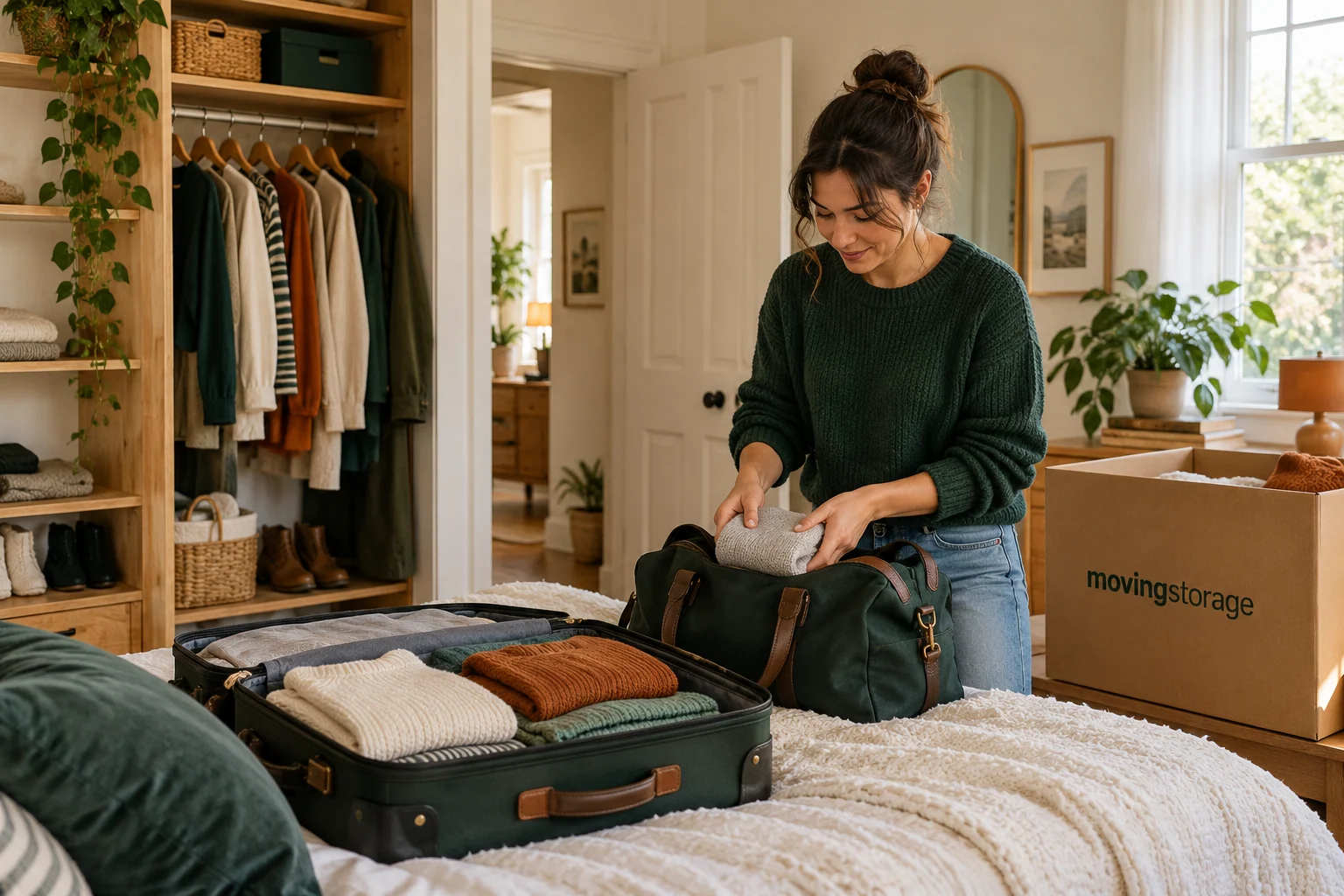
Pack the clothes you will need during the transition before packing the wardrobe itself. The useful question is which clothes must remain accessible from the last morning in your old home through the first working days in the new one. A suitcase chosen after every drawer has been sealed often contains an odd mixture of spare clothes and very few complete outfits. Make the travel selection first, then pack the rest with its destination and care needs in mind.
Give every household member a separate accessible bag, even when several people will share larger shipment cartons. Include the clothes, shoes, underwear, sleepwear, and weather layers they expect to use. Account for travel, work, school, appointments, and a reasonable delay under your actual plans. If you need a particular uniform or formal outfit shortly after arrival, name it on the list. Do not assume that a box marked “bedroom clothes” can be found quickly among a full household delivery.
Sort the wardrobe before choosing containers
Start by removing clothes that are not yours to move, such as borrowed items or garments that should be returned. Then identify donations, repairs, cleaning, and items that will stay in daily use. Keep these groups in clearly different places. A bag beside a wardrobe can look like packing to another household member even when it contains clothes intended for donation. Give every excluded bag a label and a collection or delivery plan rather than allowing it to remain an unexplained part of the moving pile.
Compare the new wardrobe's usable space with what you own. Check hanging length, drawer dimensions, shelf height, and storage for shoes or long coats. A wardrobe that looks large in a property photograph may have a different arrangement from the one you use now. This is a good time to decide what can be folded, what needs hanging, and what will be stored elsewhere. Packing around the actual destination prevents every garment arriving in a room with nowhere to put it.
Avoid making permanent decisions while tired or short of time. If a small group needs further thought, pack it separately and mark it as a decision group in your private list. Keep that group limited so it does not become an excuse to move an entire unsorted wardrobe. Write what must happen next, such as try on, repair, discuss with the owner, or compare with available space. A specific next action is easier to finish after the move than a box labelled “sort someday.”
Clean and dry clothes before closing them away
Check the care label and the garment's condition before packing. Deal with routine laundry early enough for everything to dry thoroughly. Do not seal damp clothes simply because pickup is approaching. A laundry load still waiting to dry needs a separate practical plan, not a place at the centre of a closed carton. Keep the ordinary laundry basket out of the shipment until its contents have been reviewed so wet towels or sportswear are not packed accidentally with clean clothing.
Inspect pockets, remove loose objects, and deal with belts or accessories that could mark another garment. Keep pairs and matching pieces together where that will help you dress at the destination. Photograph a complicated outfit arrangement if its accessories tend to become separated. Do not use a strong perfume, freshener, or unfamiliar cleaning treatment as a substitute for preparing the clothes properly. Follow product and garment instructions rather than adding substances that may affect another item in a sealed container.
Clothes coming from an attic, garage, or external store should be checked before they join the bedroom cartons. If you find dampness, pests, or an unexplained condition, keep the affected group separate and seek appropriate help for the actual problem. Packing it out of sight does not resolve it. Record where the clothes came from and whether they need further attention before they can share space with the rest of the wardrobe.
Choose a method for hanging garments
Ask your mover what it accepts for hanging clothes and whether garment cartons are supplied or included in the service. If you use a hanging carton, follow its assembly and loading instructions. Avoid forcing more clothes onto the rail than the container is designed to support. The container needs to hold its intended shape and close properly. A carton packed so tightly that garments are crushed together has lost much of the benefit of transporting them hanging.
Use suitable garment protection for clothing that needs it, taking account of the fabric and the travel or storage period. A cover should protect without catching on decoration, exposing hems, or making the package difficult to handle. Check the length of a dress or coat against the actual container before loading it. Keep a note of delicate closures, decorations, or supporting pieces so someone unpacking the garment can remove the cover thoughtfully.
If you decide to fold hanging clothes, group them by owner and likely destination. Keep formalwear, delicate garments, and everyday shirts distinguishable. Pack in a way that avoids hard accessories pressing into fabric. Do not mix a heavy bag of shoes with lightly protected hanging garments simply because they all belong in the same wardrobe. The destination can be the same while the handling and container needs remain different.
Fold everyday clothes in clear groups
Choose a folding method you can reproduce when the packing session is interrupted. You do not need a new wardrobe system for the move; you need identifiable groups that fit the containers and the destination. Pack one person's clothing or one clear category at a time, and record the contents as the box closes. A carton holding winter tops should not gradually become a mixture of chargers, bathroom items, and spare kitchen cloths because they happened to be on the packing table.
Use clean, dry cartons or bags appropriate for the job. Check closures and handles before filling them. A bag that is useful for carrying a few clothes by hand may not be suitable for the handling, stacking, or journey involved in the shipment. Ask the provider about the containers it accepts. Where the service requires cartons, do not substitute loose bags without agreement and assume the loading crew will solve the issue at pickup.
Keep the contents light enough to handle and avoid distorting the container. Clothing can become a substantial load when packed tightly, particularly with coats, denim, or many small items. Stop filling when the container reaches a manageable load under your circumstances or the supplier's limits. You can divide a large category across numbered cartons. The need to use one more carton is usually easier to manage than a single overloaded package that cannot be lifted or closed as intended.
Treat shoes and accessories separately
Clean and dry shoes using a method suited to their materials before packing. Protect shapes where required, keep pairs identifiable, and prevent soles or hard edges rubbing against clothing. A shoe collection does not have to travel in one large container. Group by owner, frequency of use, or destination so everyday footwear can be unpacked without disturbing occasional shoes. Keep the pair for moving day with the travel clothes, outside the cartons waiting for pickup.
Bag small accessories in clear categories without placing delicate pieces under pressure. A belt buckle can mark a soft item, and a loose hair accessory can disappear in a large carton of sweaters. Keep jewellery and other valuables under a separate plan rather than treating every bedroom accessory as ordinary clothing. If an item has a special value or handling need, identify it privately and decide how it will travel before closing the general wardrobe boxes.
Keep essential weather accessories accessible. Rainwear, a hat, gloves, or another layer may be needed during loading, a stop on the journey, or arrival in a different climate. Check your actual travel and arrival conditions close to departure using an appropriate forecast. Do not bury all seasonal items based solely on the weather at the old address. The useful accessible bag reflects the whole transition, including the time before the destination wardrobe is ready.
Be careful with compression methods
Compression products may reduce the apparent bulk of some clothes, but they do not remove the weight or make every fabric suitable for the method. Follow the product and garment guidance, and check the condition of the bag or seal. Do not force delicate, structured, embellished, or uncertain items into a method chosen only to fit a smaller carton. If you do not know how the garment will respond, select another suitable container or seek appropriate advice.
Consider when and where the clothes will be opened. A compressed bag left unopened while furniture is assembled may need a different plan from a short journey followed by immediate unpacking. Write the intended opening priority on your inventory. Avoid making a dense compressed package so heavy that it becomes difficult to control, and check whether the provider accepts that packing method. Smaller volume can hide the fact that the total load remains substantial.
Never use packing compression to conceal a damp or otherwise affected item. Resolve the condition first. If a bag loses its seal before pickup, inspect the closure and contents rather than securing an unsuitable package with improvised tape. The method needs to remain understandable and manageable for handling. Where clothes will stay packed for a prolonged period, discuss an appropriate storage approach instead of assuming a product advertised for short-term space saving is the right answer.
Label for the new rooms and the first week
Write the destination, owner or useful category, carton number, and opening priority on the package. A label such as “main bedroom, work shirts, C06” gives more practical information than “clothes.” Use the destination room names agreed for the whole household. If the wardrobe is not installed yet, note the temporary location in your inventory. A package can be delivered to the correct room while still needing an orderly place to wait for furniture.
Keep detailed or private descriptions out of public-facing labels where they are unnecessary. The outside only needs to help delivery and identification. Use your box labeling system to connect that short label with a fuller record. Record an outfit or accessory group when it would be difficult to replace quickly or identify later. You do not need to list every sock, but a named work kit or ceremony outfit may deserve a specific entry.
Put the highest-priority wardrobe package somewhere you can reach without moving heavy furniture or several lower-priority cartons. Priority is only useful when it changes the practical arrangement. Check that the accessible suitcase and the first clothing carton do not contain duplicate items while leaving out something basic. Lay out one complete outfit for the first morning at the destination before closing the travel bag. This small check is more reliable than assuming a bag full of clothing must contain what you need.
Plan the unpacking surface before opening everything
At the destination, check that the wardrobe or drawer is clean, dry, assembled correctly, and ready for use. Follow the furniture manufacturer's instructions for assembly and any required fixing. Avoid unloading all clothes onto a bed that must be used that evening. Open one group at a time and put it away before moving to the next where practical. Keep wrapping and empty cartons out of the walking route as the room becomes usable.
Inspect garments that need prompt attention and hang or unfold them as appropriate to their care instructions. If you notice damage or another concern, record it before losing the connection with the package and handling history. Keep any evidence relevant to the provider's process and follow its written instructions. Routine creases, a missing accessory, and a damaged garment are different problems, so describe what you actually find rather than recording a general complaint about a whole box.
Use your unpacking plan to finish the wardrobe in stages if the home is still being arranged. Put daily clothing away first, then seasonal items and occasional outfits. Keep a clear record of anything that remains packed. When the room is finished, the household should know where its regular clothes are and which limited packages still need a decision, without reopening every carton to reconstruct the move.
Where several people share drawers or a wardrobe, unpack together long enough to agree the new arrangement. A move can change who uses which shelf, and putting everything into the nearest empty space may create another sorting job. Keep the agreed places simple at first. You can change the arrangement once normal routines return, but the first version should let everyone find a complete set of clothes without opening another person’s bags or disturbing a stack that has already been put away.