
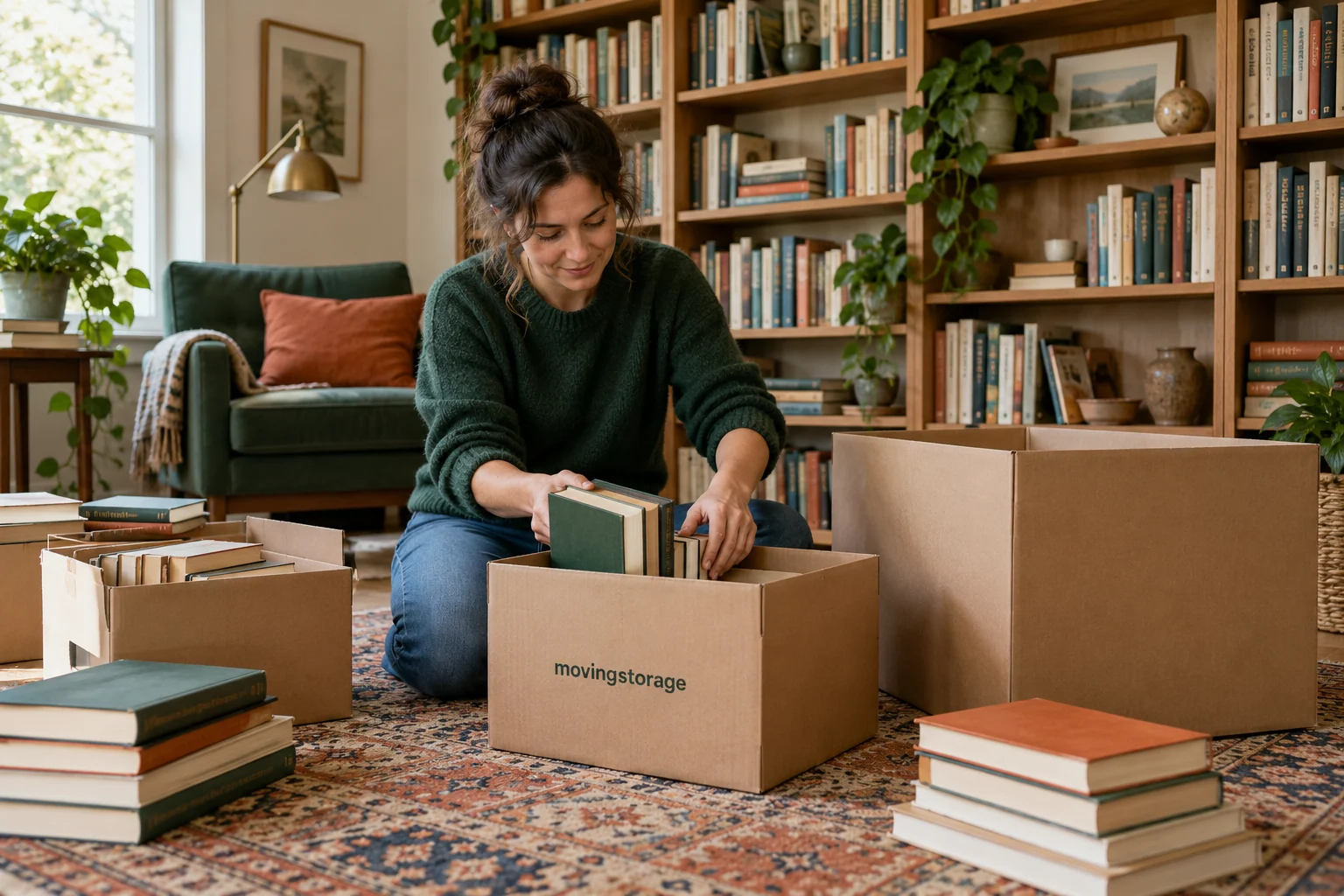
Books make a packing plan look simple until the first large carton becomes too heavy to handle comfortably. Choose the box around the weight and condition of the books, then decide how to preserve the order of the shelves. A manageable carton with a clear label is more useful than an impressive stack of oversized boxes that nobody can move confidently. Start with a small group so you can adjust the method before packing the whole collection.
Walk along the shelves before removing anything. Note which books you need during the move, which belong together, and which need separate care. A household may have current study books, borrowed library books, signed editions, children's favourites, work references, and ordinary paperbacks on the same wall. They do not all need the same destination or opening priority. Give each group a decision now so an important volume does not vanish into an otherwise low-priority box.
Decide what is actually moving
Set up a place for books that are being returned, given away, or otherwise left out of the shipment. Check the rules of a donation recipient before packing unwanted books for collection. Some recipients have limits on condition, subject, quantity, or collection arrangements. A box marked for donation should not sit among the moving cartons where a well-meaning helper may load it. Give it a different holding area and a clear next action with a date.
Do not turn packing into a rushed judgment about every book you own. If the collection matters to you and you have room for it, pack it deliberately. If shelf space will be smaller at the destination, compare the actual shelf lengths before deciding what to take. A photograph and a rough shelf measurement can help you see the scale. Avoid planning on the assumption that the new home will somehow gain an extra bookcase after the boxes arrive.
Keep borrowed books separate from personal books and return them under the owner's arrangements. Check inside volumes for documents, receipts, photographs, and loose notes before wrapping valuable or important copies. You do not need to inspect every page of an ordinary paperback, but a quick check of obvious inserts can prevent private papers being donated accidentally. Use a small envelope or folder to keep loose material with the right book without leaving it able to fall out during packing.
Choose smaller, sound cartons
Inspect each carton for a firm base, intact corners, and signs of moisture. A box with a soft bottom or crushed side is a poor choice for a dense load. Prepare the base as the carton supplier recommends and check it before adding books. Use containers you can handle under your own circumstances or that your mover accepts for the service. There is no need to reach a universal target weight just because someone else once moved a box of that size.
The Library of Congress advises choosing boxes small enough to avoid an unsafe handling load. Begin with fewer books than you think the carton will hold, then assess the load without straining. Stop filling while you can still keep the box controlled. Do not add a heavy layer simply to reach the top. You can use appropriate clean light material to fill the remaining space, provided it does not press on or distort the books.
Keep cartons similar enough to organise without forcing every book into one standard size. A wide art book may need a different container from a row of small novels. Measure the awkward volumes before buying the whole supply of boxes. Avoid bending a cover or curling a large book to fit a carton that is too narrow. The need for one unusual container should be discovered beside the shelf, where you can plan for it, rather than after every alternative has already been sealed.
Protect the shape of the book
The Library of Congress describes packing books flat with larger, heavier volumes below, or vertically with spines down. It also advises centering the load, padding empty spaces, and avoiding overpacking. Use a method suited to the books and container, with support that prevents them leaning into gaps. Keep fragile or oversized volumes out of arrangements that put pressure on a few corners. If a book will not sit comfortably, use a different carton rather than forcing the row tight.
Remove dust gently using a method suitable for the book's condition before packing. Do not begin wet cleaning, repairs, or adhesive treatments as part of a normal household packing session. If a volume is damp, affected by mould, damaged, or valuable, separate it from the ordinary packing flow and seek appropriate advice. Packing a problem out of sight makes it harder to inspect later and can affect other belongings sharing the container.
Keep clean paper or other suitable protection available for covers that could rub against one another. Avoid wrapping a valuable volume in material whose surface, ink, or adhesive could affect it. A household towel may contain dust, moisture, or a loose fastener that makes it unsuitable for direct contact with a sensitive cover. For prolonged storage or preservation-sensitive books, ask about archival materials rather than assuming every paper product provides the same conditions.
Use shelf order where it will help you unpack
Decide whether the collection is organised by author, subject, person, course, or room. If the existing order is useful, photograph each section and pack in a sequence that can be reconstructed. Number the carton and note the first and last books or the shelf section it holds. This gives you a way to find one reference without opening every carton. It also lets you rebuild an ordered set without spreading the entire collection across the floor.
Do not make the sequence so complicated that another person cannot continue it. A note saying “study wall, left bookcase, middle shelves, boxes B01 to B04” may be enough. If you use an alphabetic arrangement, keep a short index that records the range in each carton. Write the destination room outside and save detailed lists privately when they reveal sensitive interests or valuable editions. The label only needs to guide delivery and identification.
For several household members, distinguish the collections even if they will share a room. A child's reading books, a work reference library, and another person's novels may need different opening priorities. Ask the owners what must be accessible soon after arrival. A box that is low priority for one person might contain the text another person needs on the first working morning. Recording that distinction takes less time than searching sealed cartons after the move.
Separate valuable and delicate volumes
Signed copies, unusual bindings, rare editions, family books, and objects with personal significance deserve a specific plan. Photograph the condition and identify what makes the copy distinct. Keep purchase, appraisal, or ownership records with your moving paperwork where relevant. Discuss suitable packing and transport arrangements before deciding whether these books should join the general shipment. A familiar book-shaped object can still have materials or damage that require specialist handling.
Avoid repairing a loose cover or torn page with household tape simply to prepare it for moving. A conservator or preservation specialist can advise on a suitable approach when the book justifies that attention. The immediate task is to avoid further damage while arranging appropriate handling. If you are unsure whether wrapping could pull at a weak surface, stop before adding it. A packing deadline is not a good time to test an adhesive or cleaning method on a valuable binding.
If valuable books will travel under your direct control, make that arrangement clear to everyone packing and loading. Put the group with the other items excluded from the shipment and keep the inventory private. Do not rely on a special-coloured sticker alone. Written instructions and a separate holding place reduce the chance of the books being loaded accidentally. Check any applicable transport or border requirements with the relevant authority if the journey crosses borders.
Keep moisture out of the plan
Pack books only when the books and materials are dry. Check cartons that have been stored in a garage, basement, or outdoor shed before bringing them into the packing area. A carton can look intact while carrying a musty smell or a softened edge. Reject unsuitable materials rather than trying to compensate with more tape. Adding a plastic layer around an uncertain damp book does not resolve the condition of the book itself.
Plan a dry holding place between packing and pickup. Keep the boxes away from known leaks, cleaning work, and areas where they may be splashed. If the weather is wet on moving day, discuss the loading route and what protection will be used with the provider. The carton has to pass through doors and loading areas, so the route matters even when both homes are dry. Do not leave the finished books beside an open exit while the rest of the move is being organised.
Books going to storage need a separate review of conditions and access. Ask the provider about the actual environment, restrictions, and any requirements for packaging or placement. Consider how long the books may remain there and how you will inspect them if plans change. For preservation-sensitive volumes, use the Library of Congress guidance and appropriate specialist advice. Your long-term storage plan should name the books and their needs rather than treating them as unidentified general boxes.
Make the load predictable for handling
Keep the contents stable within the carton, without forcing books against the lid. The lid should close in its intended shape. A bulging top or bowed side is a sign to reassess the load. Do not use more tape to hold a distorted box together and call it finished. Move a few volumes into another container, add suitable protection to both, and check them again. A controlled packing method remains easier to repeat across a whole room.
Label a dense box clearly so its weight is not a surprise. Add the room and number on visible faces and keep any handling notes readable. Do not decorate the carton in a way that hides an old label or an instruction from a reused box. Cross out irrelevant marks once you are sure what the box now contains. Your box labels should let someone identify the destination without lifting and turning a heavy carton to find a note on the bottom.
Agree the holding and loading arrangement with the mover or the people helping you. Do not build stacks that you cannot safely manage or that exceed the container's intended use. A wall of book boxes can obstruct exits and make it difficult to see the labels at the back. Keep the route clear and allow space to lift cartons without twisting around furniture. If the load is beyond your handling ability, arrange suitable help instead of testing yourself repeatedly as you fill more boxes.
Unpack onto prepared shelves
Before opening cartons at the destination, confirm that the shelves are ready, secure, clean, and suitable for the load. Do not recreate a heavy bookcase arrangement on uncertain shelving simply to empty cartons quickly. Follow the furniture manufacturer's instructions for assembly and anchoring where applicable, and use appropriate assistance if the furniture needs installation. A sound unpacking surface is part of the plan for the books, not a separate task to leave until the cartons are open.
Open one numbered group at a time and compare it with the shelf photographs or index. Check books for changes you need to record before discarding the wrapping. Keep any concern about damage separate from ordinary rearranging so the relevant evidence and packaging are not lost. If something appears damp or otherwise affected, stop mixing it into the collection and seek appropriate advice. Follow the provider's written process for any transport concern rather than relying on an informal comment after unpacking.
Keep the carton numbers until the collection has been checked and placed. A short record of which shelf received each group can be useful if some books remain packed for later. Once the books are settled, remove empty materials from the room so the shelves and floor can be used normally. The practical finish is a collection you can find and handle, with the priority volumes available and any special-care items accounted for.
If the destination shelves will not be installed immediately, decide where the unopened book cartons can stand during that gap. Keep their numbers visible and avoid placing daily-use household boxes on top of them. Leave the reference box or current reading selection within reach. This allows you to postpone the larger shelving task without losing the books you need now. Record the temporary location in your inventory, especially if some cartons go to another room or into storage while furniture is being assembled.