
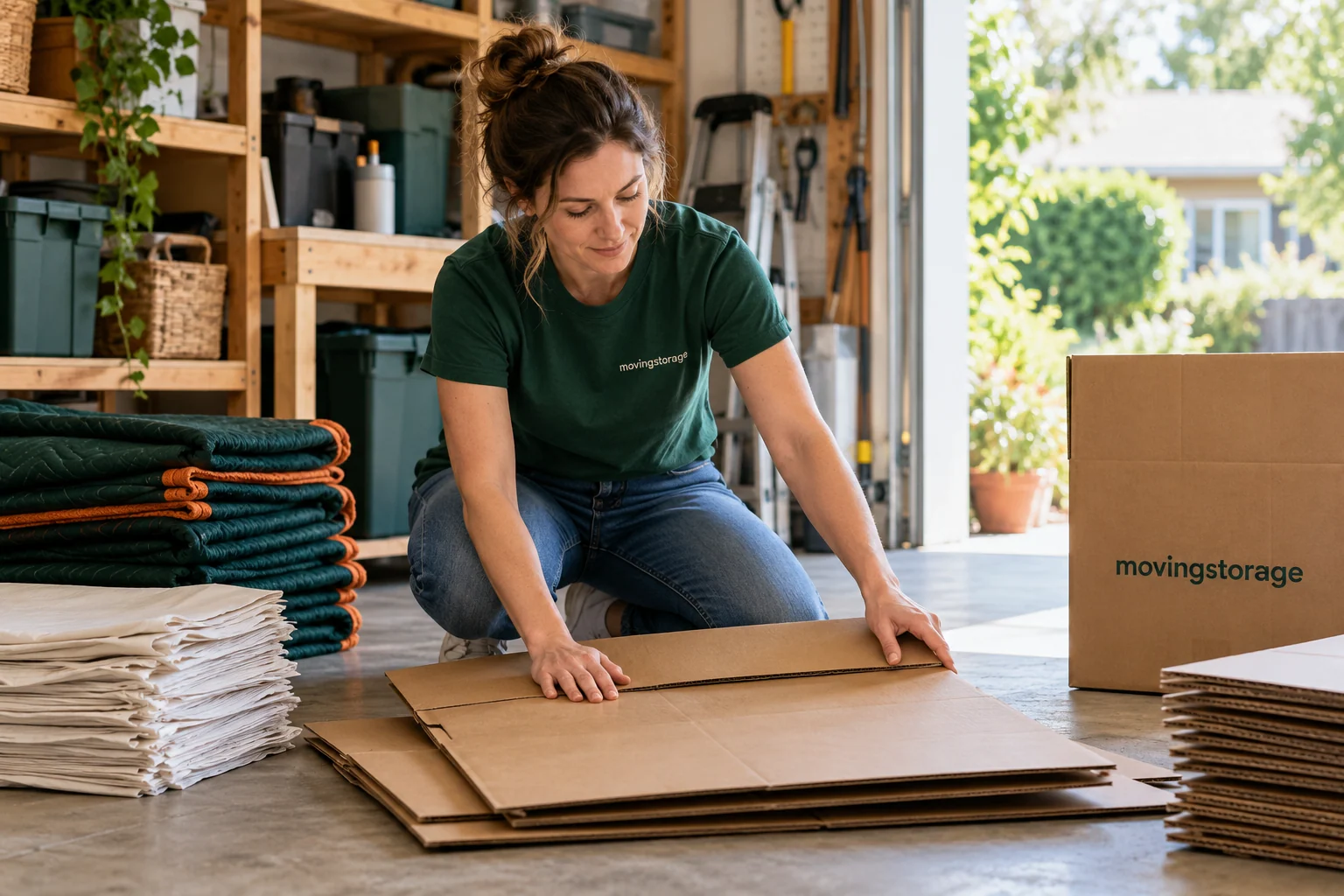
Sort packing materials as you unpack rather than creating one mixed pile at the end. Keep sound boxes separate from damaged cartons, clean paper separate from tape and loose waste, and reusable protective pieces apart from materials that need a disposal decision. A simple sorting area makes it easier to offer useful supplies to someone else and check the local rules for the rest.
The right route depends on the material, its condition, and the receiving program. A box may be useful for another move, a provider may want hired equipment returned, and a local recycler may accept only certain packaging. Check the actual requirements before arranging a handover or filling a collection bin. A familiar recycling symbol does not answer every local question.
Check that each carton is genuinely empty
Open the flaps fully and examine the corners before flattening a box. Small fittings, screws, charging leads, lids, and jewellery cases can remain inside wrapping paper or under a cardboard insert. Work over a clear surface and keep the box label visible until you have matched the contents to the inventory. Do not shake a carton over a waste bag when you have not checked what is inside.
Set aside any packaging connected to a damaged or missing-item concern. Photograph it where appropriate and follow the provider's instructions about what to retain. You may need the label, carton, or protective material to explain how an item arrived. Keep that material clearly marked so another helper does not flatten or discard it during a general cleanup.
If a box held a product that spilled, identify the product before sorting the packaging. Follow its label and relevant local disposal guidance. Do not mix an unknown residue with clean paper or offer the carton to another household. Reuse begins with knowing what the material is and whether its condition is appropriate for someone else to handle.
Separate materials by their actual type
Give cardboard, plain packing paper, plastic film, foam, and hired equipment their own places. You can use temporary labelled containers or a clear section of the room. Keep the arrangement small enough that it does not block exits, doorways, or access to the rooms you are unpacking. A recycling station should not become the next obstacle in the house.
Remove obvious loose contents, but check the receiving program before spending hours stripping every piece of tape or label. Requirements differ. Some programs give detailed preparation instructions, including how to flatten boxes or handle oversized cardboard. Follow those instructions rather than copying advice from another city or assuming that your old home's collection rules still apply.
For mixed-material packaging, identify whether parts can be separated as intended. Do not dismantle something in a way that exposes sharp pieces or hazardous contents. If the material is unclear, ask the local program or manufacturer. Guessing that an item belongs in a recycling bin can create work for the receiving facility without making it recyclable through that service.
Inspect boxes before offering them for reuse
Look at the base, corners, seams, and handles. A carton that has become soft, torn, badly crushed, or contaminated may no longer be suitable for carrying belongings. Do not describe a damaged box as moving-ready simply because it still stands upright. Be honest about condition when offering any used material, and let the recipient decide whether it suits their task.
Keep useful size groups together. A person packing books may need sound small cartons, while another person may want larger light-duty boxes. Mention the approximate dimensions and quantity rather than saying only that there are 'lots of boxes.' If special inserts or dividers are present, keep them with the matching carton so the next person can understand the setup.
Check your own future needs before giving everything away. You may need a few sound cartons for items awaiting repair, an exchange, or an upcoming storage visit. Keep a limited, deliberate quantity in a suitable dry place. A large stack kept without a purpose can use the same space you are trying to reclaim after the move.
Remove private information before handover
Look for old address labels, delivery slips, account references, inventory notes, and names on reusable boxes. Remove or obscure information appropriately before someone collects them. Check inside document sleeves and behind labels where papers can remain. A box that is empty of belongings can still carry information you did not intend to share.
If you used a detailed box-labeling system, keep the private inventory separate from the cartons you offer. You can leave a neutral room label if it is useful, but remove a note that identifies valuable contents or personal records. Ask other household members before discarding labels they may still need to reconcile an item or a condition concern.
Use a safe method for cutting or removing labels, following the tool's instructions. Avoid damaging sound carton seams simply to remove a small mark. Where a label cannot be removed cleanly, make the privacy decision first and then decide whether the box still has a suitable reuse or recycling route. The aim is to handle both information and material responsibly.
Find a recipient before arranging a drop-off
Check whether a local reuse group, neighbour, community organization, or other recipient actually wants the supplies. Describe the condition, sizes, approximate quantity, and any limitations. Do not leave boxes outside a business, charity, or apartment building without permission. An unrequested pile can become a disposal task for the person you intended to help.
For a collection, agree a time and place that works with property access rules. Share only the contact and location information needed for the handover. If the boxes must wait outdoors, consider weather and security before placing them there. A sound dry carton can lose its usefulness if it sits in rain before the recipient arrives.
Keep the arrangement manageable. Group the accepted materials and leave unaccepted items out of the collection. If plans change, contact the recipient instead of assuming they will arrive later. A confirmed handover makes the space available again; an uncertain promise can leave the same stack blocking a room for another week.
Return hired or reusable equipment correctly
Identify crates, blankets, straps, dollies, wardrobe systems, or other equipment that belongs to a provider or rental company. Check the agreement for return dates, cleaning requirements, collection arrangements, and any charges. Do not donate or recycle an item because it was left in the property after delivery. Ownership should be clear before it leaves your control.
Count the items and note their condition before return. Keep the booking or account reference with the return record, rather than attaching private account paperwork to each piece. Ask how you will receive confirmation that the return is complete. A pickup booking is not the same as a completed return if equipment remains at the home.
If a piece appears damaged, tell the provider through its stated process and ask what to do. Do not attempt an improvised repair to make it look acceptable. Follow the provider's instructions about handling and safe storage while you wait. Put the return task on the household calendar so it does not disappear behind the remaining unpacking jobs.
Check cardboard recycling rules at the new address
The Environmental Protection Agency identifies cardboard boxes as recyclable and advises flattening boxes before putting them in a recycling bin. It also tells readers to check local programs because acceptance and preparation rules can differ. Use your city, county, building, or contracted collector's current instructions for the address where the material will be collected.
Find out whether collection is curbside, from a shared room, or through a drop-off site. Check size limits, bundling directions, collection days, and any arrangements for a large volume. Do not place a stack beside a full shared bin on the assumption that it will be taken. Ask the responsible manager or collector what to do when the normal container is not enough.
Keep cardboard in suitable condition for the route you choose. Avoid mixing it with food waste, unknown residue, or loose items the program does not accept. If rain is forecast, follow the collector's directions for setting it out rather than leaving it exposed well in advance. A tidy stack indoors is useful only if it reaches the correct collection point as requested.
Treat plastic film and foam as separate questions
Plastic wrapping, air pillows, bags, and foam may look similar when they are crumpled together, but they can have different collection routes. EPA's guidance says plastic bags, wraps, and films should not go into household recycling bins and points readers toward suitable collection options. Verify what your local or retailer program accepts before taking a mixed bag there.
Check whether a program requires materials to be clean, dry, deflated, or separated. Follow its actual instructions. Do not assume a drop-off accepts every kind of flexible packaging simply because it accepts carrier bags. If a product has a manufacturer take-back route, check the current conditions and whether that route applies to the material you have.
Foam is another material to verify rather than guess. Keep large protective shapes separate from small loose pieces while you check options, and prevent loose material from spreading through shared spaces. If no local route accepts a material, ask the responsible waste service about the appropriate disposal method. Repeatedly placing it in the wrong stream does not create a recycling option.
Deal with electronics and batteries outside the packaging pile
Unpacking may reveal devices, leads, or batteries that you no longer use. Keep these separate from cardboard and ordinary packing waste. EPA advises removing personal information from electronics before donation or recycling and checking appropriate facilities. Follow manufacturer guidance or suitable technical help for the device rather than assuming that deleting a visible file removes all personal data.
EPA also states that lithium-ion batteries and devices containing them should not go in household garbage or recycling bins. Use the appropriate local or manufacturer route and follow instructions for the particular item. Do not remove a built-in battery by dismantling a device unless that action is intended and safe under its instructions.
Record any employer-owned equipment separately. Ask the employer's authorized contact about return or disposal rather than including it in a household donation. Keep accessories with the correct device until the owner or recipient confirms what it needs. The end of a move is not a reason to lose track of ownership, account access, or data responsibilities.
Keep reusable materials from taking over storage
Flatten sound empty cartons as designed and store them only where the conditions are suitable. Keep paper and protective material contained so it does not spill into a walkway. Do not stack material near equipment, heat sources, exits, or access points that must remain clear. Follow the property's rules for storage, especially in shared spaces.
Set a limit based on an identified need. You might keep a few cartons for a planned project, not every box used in the move. Mark the review date on the storage container or your household list. If the need has passed, move the material through an appropriate reuse or disposal route rather than allowing it to become another collection that must be moved later.
Your post-move storage review can include spare packaging alongside other belongings. Consider whether the space, access, and ongoing handling are justified by the likely use. A supply that is useful to another household now may be a better handover candidate than a stack you expect to keep indefinitely without a plan.
Finish with a clear collection and cleanup routine
During your unpacking sessions, move checked empty materials to the sorting area at a natural stopping point. Keep the process separate from the contents still being reviewed. Give helpers simple instructions about what is ready to flatten and what must remain untouched. That prevents useful speed from turning into the loss of labels, hardware, or records.
At the end of each session, clear the main routes and put cutting tools away. Check whether a confirmed handover, return, or collection needs to be booked. Do one practical task rather than repeatedly reorganizing the same pile. A named recipient or collection route is what turns sorted material into space you can use again.
Keep only the records needed to show equipment returns or other unfinished arrangements. Once those are complete and the remaining supplies have a purpose, the packaging cleanup is finished. You do not need to find a new use for every scrap yourself. You need to identify what can be reused, prepare accepted recyclables correctly, and send the rest through the appropriate local route.
Describe reusable supplies accurately
When offering packaging, include the condition that matters to the next user. Explain if a carton has been flattened, has a written label, or is missing an insert. Do not promise a load rating or protective performance you cannot verify. The recipient can then choose materials suitable for their own items and transport plan. Accurate descriptions also make collection simpler because both people know what is included before time is spent loading or travelling.